



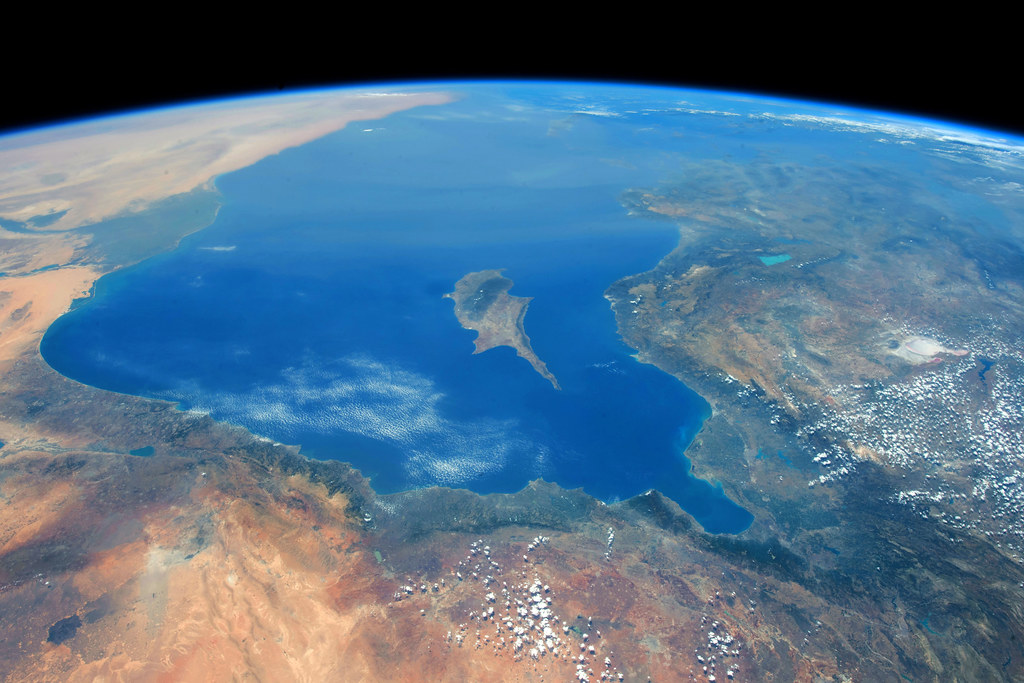
The regional security architecture of the Eastern Mediterranean underwent a structural collapse in early March 2026, as the third Gulf War transcended its original borders. The interception of Iranian ballistic missiles and Shahed-type UAVs over Cypriot airspace marked a transformative and perilous moment: the projection of the Middle Eastern conflict into the sovereign territory of a European Union member state. As Cyprus evolves from a strategic outpost into a frontline node of great power competition, the vulnerabilities of NATO’s southeastern flank have been laid bare, forcing a rapid and multi-layered military buildup by Greece, France, and other European allies.
Amidst this volatility, Ankara has adopted a posture of “hard pragmatism,” maneuvering as both an "evasive neutral" and a decisive revisionist actor in the Eastern Mediterranean. While President Recep Tayyip Erdoğan maintains diplomatic backchannels with Tehran and Washington to promote de-escalation, Turkey has simultaneously utilized the chaos to solidify its “Blue Homeland” maritime doctrine and dramatically increase its military footprint in northern Cyprus, which has been occupied by the Turkish military since 1974. This strategic gambit positions Turkey as an indispensable power broker, yet it carries an inherent risk: as the U.S.–Israel–Iran tug-of-war intensifies, Ankara’s efforts to avoid marginalization may ultimately accelerate a systemic departure from its traditional Western alliances.
The Cyprus Nexus and the Collapse of Regional Stability
The spillover of the third Gulf War has decisively repositioned the Republic of Cyprus as a frontline strategic node in the Eastern Mediterranean. Cyprus has emerged as a central theater where great power competition, regional rivalries, and non-state actors - primarily Hezbollah -converge. Already strained by escalating tensions between the United States, Israel, and the Islamic Republic of Iran, the regional security architecture underwent a qualitative collapse in early March 2026. This shift was marked by unprecedented ballistic missile and UAV attacks carried out by Iran and its proxy Hezbollah, effectively projecting the Gulf war into the sovereign territory of a European Union member state. In doing so, the conflict transcended its original geographic boundaries, extending into the European strategic sphere and exposing the vulnerabilities of existing deterrence and defense mechanisms in NATO’s southeastern flank.
At the outset of the war, on March 1, the interception of Iranian ballistic missiles transiting toward Cypriot airspace marked a transformative moment not only for regional security but also for European engagement and the Greco-Turkish conflict.[1] The incident underscored the extent to which Cyprus has become embedded in the operational logic of the conflict, serving both as a potential target and as a testing ground for broader strategic signaling. Diverging positions among NATO member states have further deepened already strained bilateral relations, particularly between Greece and Turkey, despite intermittent declarations of “mutual understanding.”[2]
The attacks on Cypriot soil may appear as collateral spillover from a broader Gulf conflict, however their implications are significantly more consequential. This article argues that the war’s geographic expansion into the Eastern Mediterranean is neither incidental nor temporary; rather, it reflects a structural transformation of the regional security environment in which Cyprus occupies a pivotal operational and symbolic role. These developments must be understood within the context of the longstanding division of the Republic of Cyprus and the ongoing illegal occupation of its northern part by Turkey since 1974. Far from being a passive stakeholder, Turkey emerges as a central actor whose strategic posture shapes the evolving dynamics of the conflict. Its firm support for the Muslim Brotherhood, its alleged role as a sponsor of terrorism, its close connections to Hamas, and its use of deeply anti-Israeli rhetoric position it in a complex and often contradictory relationship with both Western allies and regional actors.[3] Moreover, Turkey’s multifaceted relations with Russia and Iran introduce an additional layer of strategic ambiguity that further destabilizes the regional security architecture. Ankara’s positioning between competing geopolitical blocs allows it to operate as both a participant and an intermediary, complicating efforts at coordinated response within NATO and the European Union. In this context, Cyprus emerges not merely as a geographic space of conflict diffusion but as a critical arena in which broader geopolitical realignments are contested and negotiated.[4]
All eyes on Cyprus: Iranian Strikes and the Vector of Escalation
Cyprus’s flashpoint status is rooted in its historical and geopolitical context. Turkey maintains a substantial military presence in the north – approximately 40,000 troops, potentially rising to 100,000 – making it the most heavily militarized region on Earth.[5] The United Kingdom also retains sovereign bases at Akrotiri and Dhekelia.
On March 2, a Shahed-type UAV breached RAF Akrotiri’s terminal defenses, exposing both high-value Western assets and Cyprus’s vulnerability to long-range strikes.[6] Despite prior intelligence warnings from the United States and Israel, operational constraints delayed the Royal Navy’s response, with the Type 45 destroyer HMS Dragon hindered by maintenance issues. This lag raised doubts about London’s ability to secure its bases and deter sustained aerial threats.[7]The incident also triggered political repercussions within Cyprus. President Nikos Christodoulides called for an “open and frank discussion” with the United Kingdom on the future of its bases, describing them as a “colonial remnant” and reflecting concerns that foreign military infrastructure may increase exposure without ensuring protection.[8]
Hezbollah’s growing operational visibility adds an asymmetric dimension. Once a logistical and financial actor, it now actively monitors and threatens Cypriot infrastructure.[9] Following Hezbollah’s assassinated leader Hassan Nasrallah’s June 2024 threats, Cyprus has shifted from a passive outpost to a potential arena for both conventional and hybrid engagements.[10]
The Hellenic Response and the Multinational Military Buildup around Cyprus
In contrast to British operational delays, the Hellenic Republic executed a rapid, multi-layered deployment immediately following the attack on Cyprus. Athens dispatched F-16 Block 52+ aircraft and the frigates Kimon and Psara, forming a robust task force framed as a “non-negotiable fraternal duty.”[11] The deployment of Psara, equipped with the Centaur anti-drone system, is particularly significant, offering an effective response to the “low and slow” loitering munitions characteristic of Iranian proxy warfare.[12]
For Greece, this mobilization underscores that the defense of Cyprus is interlinked with Greek sovereignty in the face of revisionist powers and, by extension, European security. This posture is reinforced by the ongoing modernization of the Hellenic Armed Forces and efforts to counter the “Blue Homeland” doctrine. Within this framework, the “Achilles Shield” seeks to establish a multi-layered defensive “dome” across land and sea, integrating systems such as Spyder, Barak MX, and David’s Sling. Combined with a modernized air force, this architecture enhances interoperability with NATO and preserves a qualitative edge in the Mediterranean airspace.[13]
Greece’s strategy extends beyond Cyprus. In March 2026, Athens activated the “Greek Shield” following an Iranian missile launch toward Turkish territory that raised alarm in the Balkans. A Patriot battery was deployed to Greece’s northern border, projecting coverage over Bulgaria and addressing gaps in its missile defense. This Greece–Bulgaria axis - supported by Hellenic Air Force personnel and Bulgaria’s acquisition of “Centaur” system - has formed a critical southern NATO “firewall.”[14]
The escalation has also triggered an unprecedented European military buildup around Cyprus. France, under President Emmanuel Macron, deployed the aircraft carrier Charles de Gaulle and its strike group, alongside the frigate Languedoc and counter-drone systems. Italy, Spain, and the Netherlands have also contributed naval assets, underscoring Cyprus’s emergence as a frontline European security concern. For Cyprus, this support is existential, reinforcing its role - alongside Greece and Israel - as a pillar of stability in the Eastern Mediterranean. Its proximity to key chokepoints, including the Strait of Hormuz and the Red Sea, amplifies the global stakes, with potential disruptions affecting energy security, trade flows, and freedom of navigation.[15]
Turkey’s "Evasive Neutrality" and Strategic Recalibration
Amid these developments, Turkey has pursued a careful and calculated strategy that balances neutrality with strategic vigilance. This posture, however, has been increasingly strained by direct violations of its airspace. Between 4 and 31 March 2026, four Iranian missiles were intercepted by NATO defenses over Turkish territory, with debris falling in Hatay and near Incirlik Air Base in Adana province. [16]
Ankara’s approach is not new. Turkey appears once again to assume the role of the “evasive neutral.”[17] While maintaining formal non-involvement, Ankara closely monitors Cyprus as a critical flashpoint shaped by its historical and geopolitical significance. Turkey’s strategy is guided by multiple, overlapping considerations. First, neutrality and de-escalation remain central. President Recep Tayyip Erdoğan and Foreign Minister Fidan have consistently emphasized the need to avoid escalation, even as the three intercepted Iranian missiles over Turkey underscore both the vulnerability and vigilance of Turkey’s defensive posture.[18] Second, Ankara continues to position itself as a regional mediator, maintaining diplomatic engagement with Tehran, Riyadh, and Washington. This enables Turkey to promote de-escalation while preserving strategic credibility, allowing it to influence outcomes without direct military involvement in the Cyprus theater. Third, Turkey’s military presence in occupied northern Cyprus, combined with enhancements in regional air defense, serves as a calibrated form of deterrence, signaling readiness to respond decisively to threats against its interests while avoiding direct confrontation. Thus, despite its formal neutrality, Turkey has not remained passive. In March 2026, Ankara deployed six F-16s and advanced air defense systems to northern Cyprus, as a potent signal to Greece and the EU that any regional recalibration must account for Turkish interests.[19]
A fourth point is about domestic and regional stability considerations that weigh heavily on Ankara’s calculus. Turkish policymakers remain alert to the risks of refugee inflows from Iran, the activation of Kurdish political dynamics, and energy price volatility. These concerns are already materializing: rising oil prices linked to instability near the Strait of Hormuz have exacerbated Turkey’s economic vulnerabilities, while heightened security measures along the Iranian border reflect growing threat perceptions. Ankara has also expressed opposition to any scenario that could lead to Iran’s internal fragmentation, fearing wider regional destabilization.
At the same time, it has voiced concern over the expanding U.S. military presence in the region, warning that it may further destabilize the Eastern Mediterranean and increase the risk of a broader war.[20] Through this calibrated strategy, Turkey balances influence over an illegally occupied territory with the need to avoid direct confrontation with NATO allies or escalation of the U.S.–Israel–Iran conflict. Thus, Ankara maintains formal neutrality, even as President Erdoğan warns that any threat to Turkey will be met decisively, while emphasizing the broader goal of preventing regional war.[21]
Cyprus remains a critical flashpoint. A notable development reinforcing the Republic of Cyprus’s sovereignty claims involved competing aviation notices. An official notice providing essential information for flight operations (NOTAM) issued by Nicosia, initially citing “U.S. military operations” and covering airspace between occupied northern Cyprus and Turkey - including areas off Mersin, Adana, and Hatay - directed aircraft to communicate exclusively with Cypriot air traffic control. It was later revised (NOTAM A0345/26) to reference “possible military operations.” In response, the northern Cyprus based “Ercan Airport Civil Aviation Directorate” issued counter-NOTAM NO100/26, declaring the Cypriot notice “null and void” and asserting exclusive authority over “Ercan Advisory Airspace.” This exchange highlights the persistent contestation over sovereignty and airspace, demonstrating how the broader conflict increasingly intersects with Cyprus’s unresolved political status.[22]
Turkey’s Middleman Gambit: Cyprus as the Pivot of Eastern Mediterranean Power
Turkey’s strategy of “hard pragmatism” allows it to function simultaneously as a regional mediator and a revisionist power. By pushing the “Blue Homeland” maritime doctrine and increasing military presence in northern Cyprus, Ankara pursues its own sovereign interests while deftly maneuvering through the volatile U.S.–Israel–Iran geopolitical triangle.
As Cyprus has emerged as the central flashpoint of this struggle, Ankara faces a clear strategic challenge: safeguarding its territory, economy, and borders while ensuring that, in any emerging international security architecture - whether in Europe or the Middle East - Turkey secures a central and sovereign role as a pillar of stability and influence. Yet this ambition is inherently double-edged: should Iran be defeated and a “New Middle East” consolidate under Israeli–U.S. hegemony, Turkey risks strategic marginalization and may respond by accelerating its revisionist posture.
As the smoke clears over the intercepted debris in Hatay and the militarized shores of northern Cyprus, it becomes evident that Turkey is no longer merely reacting to the storms of the Middle East - it is actively seeking to steer them toward a future where Ankara sits at the undisputed center of the new Hellenic-Levantine order.
Turkey’s strategic vision extends beyond the Eastern Mediterranean to the Horn of Africa, where its mediation in Ethiopia and support for Somalia reinforce Ankara’s multipolar ambitions. By opposing Israel’s recognition of Somaliland, Turkey bolsters African sovereignty while projecting influence across a region increasingly divided between competing Gulf and Western coalitions. [23]
Iran’s military buildup illustrates the consequences of decades of appeasement, including tolerance of its cooperation with Russia and China, gradual sanction relief, and broader diplomatic accommodation. A similar dynamic risks emerging with Turkey. Despite its NATO membership, Ankara’s deepening ties with Russia and Iran, nuclear ambitions, and record of cultivating proxy networks point to a trajectory that, if left unchecked, could evolve into a systemic challenge rather than a manageable divergence within the alliance.
Dr. Stella Gerani is a Postdoctoral Fellow at the Leonard Davis Institute for International Relations, Hebrew University of Jerusalem, specializing in Turkey’s strategic expansion in the Horn of Africa. She teaches Energy Politics and Security at the International Hellenic University in Thessaloniki, Greece. She is also a Senior Analyst at the Research Institute for European and American Studies (RIEAS) in Athens.
*The opinions expressed in MDC publications are the authors’ alone.
[1] “Iranian missiles fired toward UK bases in Cyprus,” i24NEWS, March 01, 2026.
[2] “Greece seeks 'normal, functional' ties with Türkiye after Ankara summit,” Türkiye Today, February 16, 2026; “Athens Declaration on Friendly Relations and Good-Neighbourliness,” Hellenic Republic, The Prime Minister, February 7, 2023.
[3] Abdullah Bozkurt, “A new Muslim Brotherhood outfit operates under the wing of the Erdogan gov’t to execute influence operations,” Nordic Monitor, February 12, 2025; Ezra Tekin, “Turkish intel chief, Hamas delegation discuss Israel's attacks on Palestine,” Anadolu Ajansi, March 22, 2026; Abdullah Bozkurt, “Erdogan advisor linked to IRGC Quds Force spent several years at World Bank in Washington,” Nordic Monitor, March 26, 2026.
[4] “Fidan: US-Iran diplomacy stalled but Tehran open to back-channel talks,” Yeni Şafak, March 16, 2026; Yeni Şafak Newsroom, “Russian analysis sees Türkiye as key player if Iran weakens,” Yeni Şafak, March 13, 2026.
[5] “Turkey Doubles Troops in Northern Cyprus: Eastern Mediterranean on the Brink,” Defence Security Asia, September 3, 2025.
[6] Carlotta Gall, “Drone Strike Has Cyprus, and Europe, on Edge,” The New York Times, March 13, 2026.
[7] Yaakov Chaliotis, “Britain’s Cyprus Bases, an Akrotiri Drone Strike & the 1960 Promise,” The Times of Israel, March 23, 2026.
[8] Millie Cook, “Cypriot president demands talks with UK over military bases – branding them ‘colonial consequences’,” The Independent, March 19, 2026.
[9] Hanin Ghaddar, Farzin Nadimi and David Schenker, “Hezbollah Threatens Cyprus: Capabilities, Intentions, and Potential Consequences,” The Washington Institute for Near East Policy, June 21, 2024
[10] Ted Deutch and Endy Zemenides, “It is Time to Permanently Waive the Cyprus Arms Embargo,” American Jewish Committee, March 9, 2026.
[11] “Statement by the Minister of National Defence Nikos Dendias,” Hellenic Republic, Ministry of National Defence, March 2, 2026.
“Συνέντευξη Υπουργού Εξωτερικών, Γιώργου Γεραπετρίτη στην τηλεοπτική εκπομπή του ΣΚΑΙ «Πόλεμος στο Ιράν - Η επόμενη μέρα» με τον Αλέξη Παπαχελά (05.03.2026),” Hellenic Republic, Ministry of Foreign Affairs, March 5, 2026.
[12] “Visit of the Minister of National Defence Nikos Dendias to Cyprus,” Hellenic Republic, Ministry of National Defence, March 3, 2026.
[13] “Greece approves Israeli air defenses, F-16 upgrades in major military push,” Yeni Şafak, March 17, 2026.
[14] “Statement by the Minister of National Defence Nikos Dendias after new conversation with Bulgarian Counterpart Atanas Zapryanov,” Hellenic Republic, Ministry of National Defence, March 6, 2026; “Minister of National Defence N. Dendias Visits Bulgaria,” Hellenic Republic, Ministry of National Defence, March 12, 2026.
[15] Ioannis Karagiorgas, “Spain, Italy and Netherlands join European naval deployment to Cyprus,” Euronews, March 5, 2026.
[16] Tuvan Gumrukcu and Ece Toksabay, “Turkey says NATO defences intercepted third missile from Iran, asks Tehran to clarify,” Reuters, March 13, 2026.
[17] Frank G. Weber, The Evasive Neutral: Germany, Britain and the Quest for a Turkish Alliance in the Second World War (Columbia: University of Missouri Press, 1979).
[18] “Türkiye deploys Patriot air defense system in eastern province,” Yeni Şafak, March 10, 2026.
[19] “Türkiye deploys F-16s, air defense systems to Northern Cyprus amid regional tensions,” Yeni Şafak, March 9, 2026.
[20] “Erdoğan warns against actions damaging Türkiye's centuries-old ties with Iran,” Yeni Şafak, March 9, 2026.; “Türkiye stepped up diplomacy to end Iran war: Fidan,” TRTWORLD, March 7, 2026.
[21] Turkish President Says Ankara Taking Defensive Measures, Will Not Be Drawn into Regional Conflict,” Kurdistan 24, March 14, 2026.
[22] “Türkiye says Greek Cypriot NOTAM 'null and void,' warns against exploiting crisis,” Türkiye Today, March 18, 2026.
[23] Esra Karataş Alpay, “Why Türkiye and Ethiopia’s 100-year partnership matters at a strategic crossroads,” TRTWORLD, February 20,2026.; “News: Egypt signals support for Ethiopia’s Red Sea access if Nile dispute eases – report,” Addis Standard, February 24,2026.