




Overview of Morocco's New Geopolitical and Geoeconomic Strategies
Morocco's geopolitical environment is undergoing a significant transformation, driven by its strategic Atlantic positioning. The kingdom's foreign policy is anchored in Atlanticism -prioritizing trans-Atlantic partnerships and institutions as the twin pillars of security and economic cooperation. Growing regional instability across the Maghreb and West Africa is pushing Morocco to leverage its geography as a stabilizing force and an economic pivot between West Africa, Europe, North Africa, the Arab world, and emerging Atlantic economies such as Brazil and South Africa.
Morocco's is pursuing this geoeconomic strategy through four principal avenues: economic diplomacy to broaden international partnerships; economic diversification through structural transformation and innovation; infrastructure development as a platform for regional integration; and engagement with multilateral institutions to enhance competitiveness. Taken together, these efforts position Morocco as a hub bridging Africa, Europe, the Middle East, and Atlantic trade networks.
These geoeconomic strategies are directly linked to domestic reform agendas aimed at addressing the country's most pressing socio-economic challenges, which include youth unemployment, poverty, income inequality (manifested in persistent urban-rural and regional disparities), and vulnerabilities in the agricultural sector. The Moroccan government expects that geoeconomic initiatives, combined with domestic economic reforms and inclusive development programs,[1] will deliver the critically important outcomes of higher growth rates, expanded job creation, reduced poverty, and more equitable provision of public services.
Unresolved Conflicts, Security Concerns, and Regional Cooperation
Morocco confronts a range of security challenges that demand collaborative regional responses. Trans-regional criminality–including drug and arms trafficking originating from Latin America–poses ongoing threats. These are compounded by persistent pressure from Algeria, backed by Russia, and by the threat of jihadist terrorism associated with groups such as Al-Qaeda. Morocco's participation in NATO's Mediterranean Dialogue accordingly provides a vital strategic platform for strengthening regional security cooperation.[2]
The Atlantic basin remains fraught with unresolved conflicts that complicate regional cooperation and weigh on Morocco's strategic interests. Algeria's support for the Polisario Front in Western Sahara, together with its substantial military procurement from Russia, heightens bilateral tensions. The continued closure of the Morocco-Algeria border remains a major obstacle to Maghrebi integration. Russian and Iranian military support to Algeria and the Polisario Front constitutes a considerable strategic risk for Morocco, which must simultaneously contend with jihadist groups operating across the Sahel.
In this context, domestic reforms take on added geopolitical significance, shaping Morocco's international reputation and regional influence. The country's image as a stable and distinctive state is essential to consolidating its standing on the world stage.[3]
Transportation Infrastructure Development and Regional Economic Cooperation as a Strategic Priority
Infrastructure development lies at the heart of Morocco's international engagement and economic growth strategy. The Tanger Med port stands as a flagship achievement—now the largest port in Africa and the largest in the Mediterranean, and among the twenty busiest container ports worldwide. In addition to its enormous container and general cargo throughput, the port handles roll-on/roll-off (Ro-Ro) traffic exceeding half a million trucks per year. The Tanger Med Group has also developed extensive industrial zones, logistics parks, and related infrastructure anchored to the port; exports from these industrial zones account for approximately 20 percent of Morocco's total exports.[4] Encouraged by this success, Morocco is replicating the Tanger Med model at new port sites across the country.
Complementary investments in road and rail infrastructure are advancing regional integration further. The highway network now comprises three main operational corridors, and the high-speed rail line linking Casablanca and Tangier, currently under construction, is expected to reduce travel time to 2.5 hours. By 2030, Morocco aims to operate 1,500 kilometers of TGV (“Train à Grande Vitesse”) high-speed rail connecting its major cities. New terminals at Casablanca International Airport are also underway, with the goal of raising annual capacity to 10 million passengers.[5]
Morocco's infrastructure investments are conceived as instruments of broader regional integration and economic development across North Africa and beyond. The Trans-Maghreb Highway represents a key element of regional connectivity, though significant political obstacles remain. Ongoing investments in logistics platforms and railway modernization are designed to facilitate trade flows, and the potential for energy trade and economic complementarity with Algeria, pending a favorable political shift, remains considerable.
Future Scenarios for Morocco's Geopolitics
Several scenarios could shape Morocco's geopolitical trajectory over the coming decade. A fragmented Europe would complicate Morocco's strategic options and dampen foreign investment, while a more cohesive Europe could enhance cooperation and attract capital to Morocco and the broader Maghreb. The consolidation of a new Atlanticism could help Morocco diversify its international partnerships, particularly with emerging economies.
Cooperation with Israel in the Context of Moroccan Geostrategic and Geoeconomic Challenges
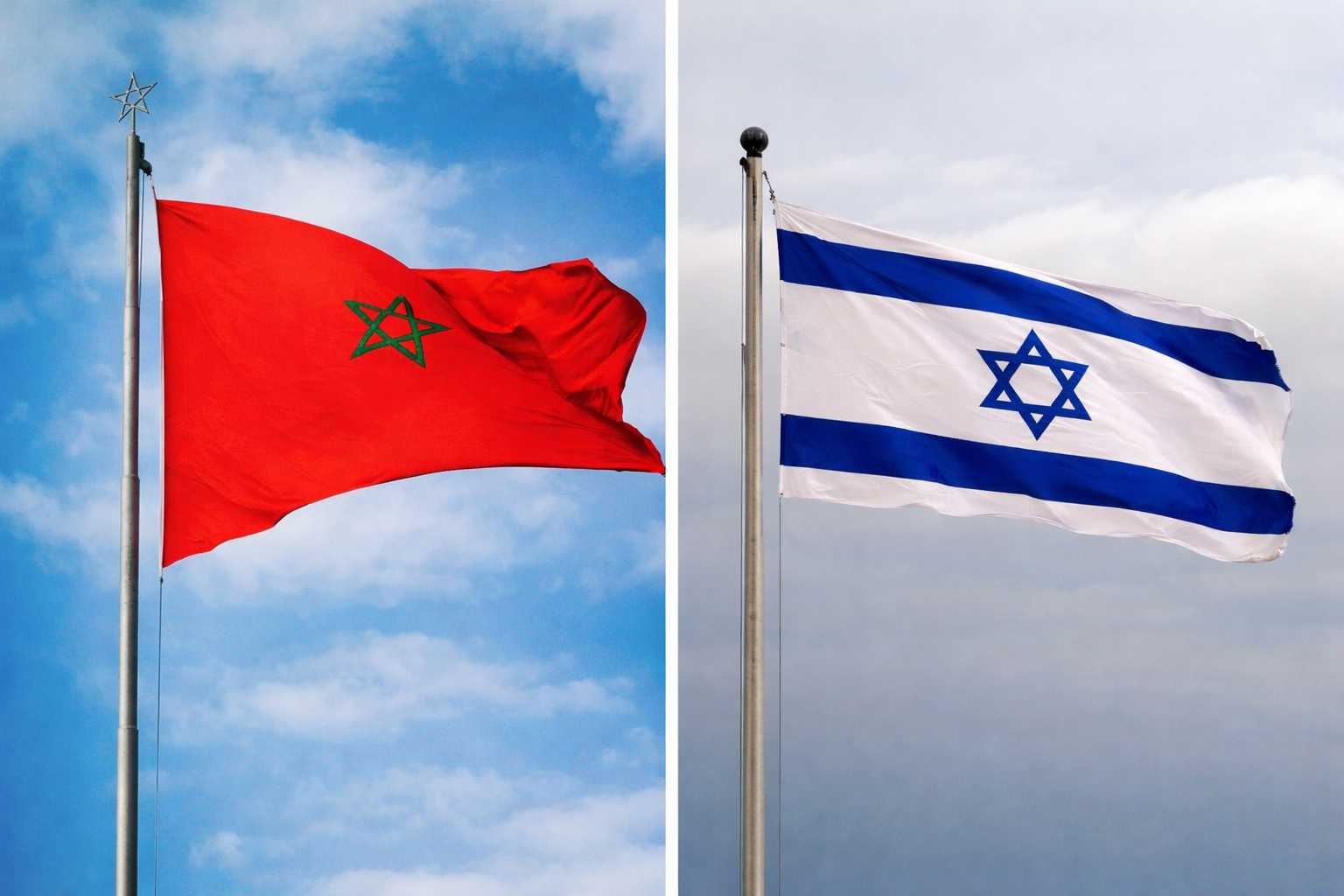
On December 22, 2020, President Trump announced that Morocco had agreed to restore diplomatic ties with Israel and reopen liaison offices in Rabat and Tel Aviv. Although official relations had been severed since the Second Intifada, back-channel cooperation between the two countries continued throughout the intervening years. The resumption of ties exceeded Israeli expectations, with bilateral relations rapidly deepening through high-level official visits, direct flights, and growing economic engagement. Progress toward full embassy-level representation, however, stalled over competing prerequisites: Israel sought Morocco's formal commitment to upgrade its liaison office before recognizing Moroccan sovereignty over Western Sahara, while Morocco waited for the recognition first. In July 2023, Israel proceeded with that recognition —a significant diplomatic milestone. Yet the anticipated embassy upgrade has not materialized, with Morocco's reluctance hardening following the October 7, 2023 attacks and the ensuing Gaza war, which complicated Rabat's domestic and regional positioning on normalization with Israel.
Security cooperation, by contrast, has progressed substantially. Israel has concluded major arms agreements with Morocco, supplying advanced UAVs including the Heron and recently committed to delivering 150 additional units.[6] Morocco is reported to operate five types of Israeli UAV systems, including the Hermes 900 and the Heron.[7] The two countries have also signed cybersecurity cooperation agreements, and military ties have been further strengthened through joint air force exercises, air combat training, and Israeli use of Moroccan airspace.[8] Morocco's International University of Rabat and Israel Aerospace Industries (IAI) have signed an MOU to establish a center of excellence in aeronautics and artificial intelligence within the kingdom, encompassing R&D cooperation, knowledge transfer, and student internship programs.[9] In 2024, Israel's BlueBird Aero Systems announced the opening of a new facility near Casablanca for the production and assembly of SpyX loitering munitions, enhancing Morocco's advanced military manufacturing capabilities. That same year, IAI secured a $1 billion agreement to supply Morocco with Ofeq 13 reconnaissance satellites, significantly expanding the country's intelligence capacity and deepening bilateral strategic ties.
Economic relations, however, have been slow to develop. As of 2024, bilateral civilian trade remains negligible for both parties: at a total annual volume of approximately $180 million, Israeli-Moroccan trade in civilian goods represents no more than 0.1 percent of Israel's total international trade and an equivalent proportion of Morocco's.[10]
Nevertheless, given Morocco's economic challenges and geoeconomic ambitions, the potential for expanded cooperation is considerable. The main areas of opportunity are outlined below.
Trade. While the potential for direct bilateral trade is limited, the scope for multilateral trade cooperation is substantial. Morocco can serve as an important hub for Israeli trade with West Africa, North Africa, southwestern Europe, and the southern Atlantic - a relationship that could, over time, grow into a multi-billion-dollar trade corridor.
Energy. Morocco is investing heavily in renewable energy production with two objectives: reducing its significant dependence on natural gas imports, particularly from Algeria, and establishing itself as a leader in the evolving Atlantic clean energy landscape. Israeli companies are well-placed to play a meaningful role in Morocco's emergence as a major producer of solar-based electricity -both for domestic consumption and for export to Europe and West Africa.
Water and agriculture. Like most countries in the Middle East and Africa, Morocco is a water-scarce nation, and climate change has intensified the impact of water stress and erratic rainfall on its agricultural sector. Agriculture remains a cornerstone of the Moroccan economy, providing employment for 30 percent of the workforce and sustaining the livelihoods of 35-40 percent of the population. Cooperation with Israel could significantly advance Morocco's National Water Plan, which promotes water conservation and efficiency through drip irrigation, micro-sprinklers, soil moisture sensors, and pricing reforms, while also strengthening water governance and ecosystem protection. Israeli expertise could equally support Morocco's "Green Morocco Plan," which seeks to modernize farming, expand irrigated areas using advanced technologies, shift from low-value rain-fed crops to high-value export-oriented production, and bolster rural incomes. Some cooperation has taken place in these areas, but it remains modest relative to the scale of need and potential.
Healthcare. Meaningful progress has been made in Israeli-Moroccan cooperation to strengthen health infrastructure in remote and underserved areas. Here too, however, the advances achieved remain well below both the scale of existing need and the broader potential for collaboration.[11]
Conclusion
Morocco's evolving geopolitical and geoeconomic landscape presents a compelling mix of opportunities and challenges. While political complexities – particularly those surrounding regional integration and the normalization process with Israel – continue to constrain strategic choices, the foundations being laid through infrastructure development, security cooperation, and sectoral partnerships hold considerable promise for the decade ahead. The substantial potential for expanded collaboration in trade, energy, agriculture, water management, and healthcare could not only reinforce Morocco's domestic resilience but also cement its role as a pivotal hub for regional trade and innovation. Realizing this potential will depend on favorable political conditions and sustained commitment from all stakeholders involved.
Yitzhak Gal is a researcher at the Moshe Dayan Center (MDC) for Middle Eastern and African Studies, and a senior economic and business consultant.
Jonathan Ghariani is a researcher at the Moshe Dayan Center (MDC) for Middle Eastern and African Studies, and coordinator of the Morocco-Israel Policy Forum at the Forum for Regional Cooperation. He is currently an adjunct professor at the American College of Mediterranean in Aix en Provence.
*The opinions expressed in MDC publications are the authors’ alone.
[1] For example: (1) the National Initiative for Human Development (INDH), which targets improvement of living conditions and reduction of poverty in poor rural communities, disadvantaged urban neighbourhoods, and targeted groups of women and youth; and (2) the Green Generation Program (2020–2030) - Morocco’s agricultural strategy emphasizing rural inclusion and employment.
[2] Ian O. Lesser, Geoffrey Kemp, Emiliano Alessandri, and S. Enders Wimbush, "Morocco’s New Geopolitics: A Wider Atlantic Perspective," The German Marshall Fund of the United States, p. 13.
[3] Ibid, p. 59
[4] Tanger Med port was developed and is owned by the Tanger Med Special Agency (TMSA), a public corporation controlled by the Hassan II Fund for Economic and Social Development. Tanger Med container terminals are operated by global terminal operators, under concession agreements. Tanger Med website, Ports | Tanger Med Special Agency
[5] Global Highways website, Morocco’s $765 million motorway expansion | Global Highways; SNCF Group website, Morocco’s high-speed rail service is a triumph | SNCF Group
[6] Aya Benazizi, “Morocco Purchases 150 Israeli Military Drones,” Morocco World News, September 22, 2022.
[7] Intissar Fakir, “Morocco and Israel: Economic Opportunities, Military Incentives, and Moral Hazards," Middle East Institute, December 2022.
[8] Oded Yaron, “Israeli Arms Exports to Morocco: From Pegasus to Kamikaze Drones,” Haaretz, July 19, 2022; Jonathan Ghariani, “Israel and Morocco: From Clandestine Partnership to the Abraham Accords,” Azrieli Institute of Israeli Studies, Concordia University, Occasional Papers, Issue no. 1.
Jamal Amiar, Le Maroc, Israël et les Juifs Marocains: Culture, Politique, Diplomatie, Business et Religion (BiblioMonde, 2022), p. 162
[9] Jihane Rahhou, “Morocco’s UIR, Israel Aerospace Industries Join Forces to Launch Center for Aeronautics, AI,” Morocco World News, May 22, 2023.
[10] Total import and export of goods. Computed using Moroccan trade statistics for Moroccan exports to Israel (as it includes also indirect exports which are not registered in Israeli trade statistics; and Israeli trade statistics for Israeli exports to Morocco (as it excludes military products which are partly registered in Moroccan statistics). Source: UNCOMTRADE database.
[11] Eran Lerman and Nacima Kerouad, "The Moroccan-Israeli Relationship: New Horizons and the Prospects of Cooperation in Africa," Jerusalem Institute for Strategy and Security (JISS), August 1, 2024.