


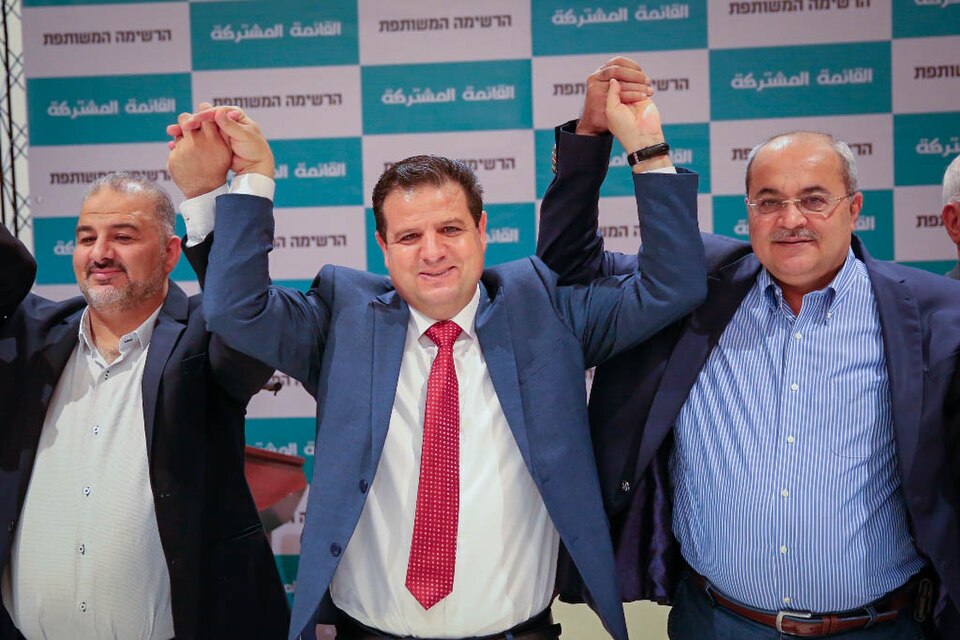
Original photo: Zaher333, from Wikimedia Commons [CC BY-SA 4.0]
Summary
The establishment of the Joint List in 2015 was not based on a shared ideological vision but rather on a concern over the loss of political resources needed for the continued parliamentary activity of the Arab parties. Despite this, the unification was presented to the public as a historic move with broad normative significance.
Ra’am’s departure from the Joint List in 2021 reflected a deep ideological disagreement over the role of the Arab parties in Israel: participation in the government to achieve civic goals as opposed to promoting a nationalistic agenda.
The unification process ahead of the 26th Knesset elections will not eliminate the disagreements among the Arab parties. It is not being framed as a historic achievement but rather as a pragmatic step toward a defined goal: maximizing political power in the face of the violence and crime plaguing Arab society.
The unity of the parties will likely be tested on a daily basis until the elections. Past experience shows that in the absence of genuine unity the passage of time may act to destabilize rather than stabilize the situation.
The Joint List is one of the most important and exceptional phenomena that has emerged in the Israeli political arena over the past decade. The unification of Arab parties with different—and at times even conflicting—ideological identities into a single parliamentary framework raised expectations of a change in the character of representation of Arab citizens in Israel and of a strengthening of their political power on the national stage. However, from its very inception it became clear that the Joint List was not merely a technical electoral solution, but a complex political arena in which historical, ideological, and organizational tensions converge (Akirav, 2020; Kook, 2019; Hitman, 2018).
The establishment of the Joint List ahead of the elections for the 26th Knesset is taking place in a social and political reality which is fundamentally different from that which prevailed in 2015. The escalation of violence and organized crime in Arab society, alongside the erosion of parliamentary representation and the intensified sense of exclusion, has created a widespread feeling of urgency among Arab citizens. This article considers whether the attempts to achieve unity in 2026 reflect cumulative political learning or whether it is yet another cyclical response to an isolated crisis that does not fundamentally alter the course of political action.
The theoretical contribution of the article
The article contributes to the theoretical discussion of the politics of national minorities on three levels. First, it presents an analytical distinction between ideological-symbolic unity and instrumental unity that is aware of its limitations. In contrast to parts of the classical literature, which identifies political unity with ideological consensus or with a shared collective identity (Kymlicka, 2007), it is argued here that unity can also emerge in the absence of a common ideological base, as a result of accumulated constraints, the experience of failure, and gradual political learning.
Second, the article emphasizes the role of the public as an active agent in political learning. Previous studies characterized the Arab public as reactive (Jamal, 2022), but findings from a recent study show that the public consciously activates mechanisms of reward and punishment by means of their voting choices and abstention from voting (Sarsour, 2021).
Third, the article elucidates the concept of the “power ceiling” in minority political frameworks and shows that significant electoral achievements do not necessarily guarantee sustained political influence in the absence of institutional anchoring and a clear parliamentary strategy (Akirav, 2020).
Unity as an outcome of institutional constraints: The establishment of the Joint List in 2015
The Joint List was established at the beginning of 2015 after the raising of the electoral threshold to 3.25%, a legislative move that Arab parties viewed as a genuine threat to their parliamentary representation (Sweid, 2017). This institutional constraint forced the four parties—Hadash, Balad, Ta’al, and Ra’am—to unite into a single electoral framework despite their significant ideological and organizational differences.
Findings from a qualitative study involving in-depth interviews of key political figures show that the unification did not stem from ideological convergence or the crystallization of a shared vision, but from a real fear of losing representation, funding, and political resources essential for continued parliamentary activity (Sarsour, 2021). This instrumental perception was also reflected in the structure of the internal agreements between the parties, which focused on the allocation of realistic Knesset slots and rotation arrangements, while avoiding the formulation of a binding ideological document. Nonetheless, the unification was presented in public discourse as a historic move with broad normative significance. The gap between the essence of the unification and the image created by its leaders laid the foundation for the tensions that later developed.
Between rhetoric and reality: The performance of the Joint List in the 20th Knesset
The term of the 20th Knesset (2015–19) served as the first and most significant testing ground for the Joint List, both in the eyes of the Arab public and in the broader Israeli political arena. On the one hand, the Joint List achieved unprecedented electoral success: 13 seats and an especially high turnout rate of 64%, a reflection of broad public mobilization and genuine hopes for a change in patterns of representation and influence. This achievement strengthened the perception of the Joint List as a collective political framework with real potential to achieve parliamentary influence.
On the other hand, a number of structural failures in the Joint List’s internal functioning were exposed during its first term, including ongoing organizational tensions, disputes over the distribution of power and allocation of jobs, and the absence of binding institutional mechanisms for managing a diverse political partnership over time. This gap between an impressive electoral achievement and the difficulty in translating it into organizational stability and sustained political influence laid the groundwork for the crises that developed in the years that followed.
Based on the analysis of the interviews in Sarsour’s research, the rotation crisis was not merely a technical event but a structural breaking point that exposed the gap between unity rhetoric and the reality on the ground. Interviewees described how narrow party interests prevailed over considerations of the party’s collective good, and how ambiguity in the internal agreements led to a loss of trust and public disappointment (Sarsour, 2021; Shapira, 2020).
The split in 2019 and punishment by the public
The dismantling of the Joint List on the eve of the elections for the 21st Knesset in April 2019 marked a breaking point in the relations between the Arab public and its political leadership. The sharp decline in Arab voter turnout (to approximately 49%) cannot be explained by political apathy or technical circumstances, but rather reflects a clear and distinct change in voter behavior.
The Arab public interpreted the dismantling of the Joint List as a breach of trust by the parties’ leaderships and as a failure in achieving collective responsibility. In this context, abstention from voting served as a conscious political punishment, through which the public expressed its protest against a leadership perceived as preferring narrow party considerations over the interest of broad representation (Sarsour, 2021). This pattern reinforces the argument that the decline in electoral participation in 2019 was the product of active political disappointment rather than passive alienation.
The reunification ahead of the September 2019 elections was achieved primarily out of fear of long-term electoral damage, and in the elections for the 23rd Knesset in 2020 it led to a record achievement of 15 seats and a renewal of the upward trend in voter turnout. However, this achievement too was not translated into sustained political influence due to, among other reasons, structural limitations, the absence of an agreed-upon strategy, and ambiguity regarding the boundaries of the Joint List’s political activity (Akirav, 2020).
The split prior to the elections for the 24th Knesset in 2021, when Ra’am left the Joint List, reflected a deep ideological disagreement regarding the role of Arab political representation in Israel. Research findings show that there were politicians who viewed political partnership with Israeli governments as a legitimate tool for achieving civic gains (Sarsour, 2021), while others saw such partnership as a deviation from the oppositional-nationalistic line (Zur & Bakker, 2025). This gap made clear the limits of unity that does not define agreed-upon rules of action.
Instrumental unity that is aware of its limitations: The 2026 experience
The unity taking shape ahead of the elections for the 26th Knesset is viewed from the outset as a temporary and merely pragmatic electoral alliance. It does not seek to create a shared ideological vision or to blur fundamental disagreements, but rather reflects a conscious recognition of the existence of these disagreements and their postponement in order to realize a narrowly defined goal: to maximize political power in the face of a severe social crisis, particularly in the face of violence and organized crime in Arab society. In this sense, it is instrumental unity that reflects cumulative political learning at the level of public and political awareness; nonetheless, it has not yet been translated into institutional anchoring and binding mechanisms that would ensure its long-term stability.
A clear example of the nature of this unity can be found in the public pressure exerted on Arab party leaderships at the beginning of 2026, following a wave of large-scale demonstrations against violence and crime in Arab society. According to news reports, party leaders signed a document to re-establish the Joint List following persistent public demands for unified political representation, one that has a binding and obligatory character (Majadle, 2026). Thus the unity achieved is not the product of ideological consensus, but rather is a pragmatic response to the existing social distress and to civic pressure that has become an important factor in shaping leadership decisions.
Discussion: Unity, time, and political learning in the Arab arena in Israel
The establishment of the Joint List ahead of the elections for the 26th Knesset calls for an analysis that goes beyond simply a theoretical comparison between previous unification attempts. It in fact requires a fundamental examination of processes of political learning, of the interaction between the leadership and the public, and of the structural limitations shaping the actions of minority political frameworks within a dominant majority system. In contrast to cyclical narratives that view unity as the product of a specific external constraint, the analysis points to a cumulative, multi-year process of internalizing failure, punishment by the public, and a renewed understanding of the limits of the possible in the parliamentary arena.
The unity emerging in 2026 is first and foremost a response to an ongoing social and political crisis rather than the fulfillment of a comprehensive ideological vision. Violence and organized crime, perceived by the Arab public as a day-to-day threat, have altered political priorities and framed the question of unity not as a value-based choice but rather as a civic necessity. In this context, unity is no longer presented as a “historic moment” or as a symbolic achievement, but rather as a pragmatic move intended to maximize political power, with the goal of dealing with tangible problems (Maariv Online, 2026).
Nevertheless, there is a gap between the public’s learning process and that of the parties. The Arab public gradually internalized that political fragmentation leads to erosion of representation, loss of legitimacy, and a reduced ability to influence the government’s agenda. In contrast, the parties’ leaderships tended to interpret those same events through a prism of organizational survival, resource allocation, and preservation of political assets. This gap explains why—even after repeated crises—binding institutional mechanisms for managing disputes and internal power distribution did not gain a foothold (Sarsour, 2021).
Time plays a central role in the analysis of the 2026 attempt to unify. Unlike previous unifications that were subject to a time constraint due to the early scheduling of Knesset elections, the fact that the date of the elections for the 26th Knesset has not been moved (so far) has resulted in a prolonged period during which unity is put to the test on a daily basis. This period of time may allow for more systematic preparation, the formulation of clear rules of the game, and institutional regulation; however, at the same time it also increases the risk that tensions related to leadership, jockeying for position on party lists, and the distribution of political credit will become exacerbated. Past experience teaches that in the absence of institutional regulation, time sometimes leads to destabilization rather than stabilization.
This discussion reinforces the “power ceiling” argument regarding minority political frameworks. Even when impressive electoral achievements are attained, as occurred in the 2020 elections, the ability to translate numerical power into sustained political influence remains limited. The constraints of the political system, the lack of willingness among majority players to enter into a genuine partnership, and the absence of an internally agreed-upon parliamentary strategy create a persistent gap between electoral strength and actual influence (Akirav, 2020). The attempt to achieve unity in 2026 may replicate this gap if it is not accompanied by a qualitative change in internal practices and behavior.
In this context, the instrumental unity of 2026 demonstrates that the lessons of the past have only been partially learned. It does reflect the internalization of the price of fragmentation, but at the same time there has not been in-depth institutional learning to achieve sustainable political partnership. As long as unity is perceived as a way to survive rather than a framework for action that requires binding regulation, it remains fragile and vulnerable.
Conclusions
This article has argued that the attempt to establish the Joint List ahead of the elections for the 26th Knesset is not merely a return to past political behavior, but rather reflects a more advanced stage of political strategy in the Arab arena in Israel. The unity achieved in 2026 was born out of a rare combination of severe social crisis, consistent public pressure, and heightened awareness of the constraints on political action within Israel’s political system. Unlike the 2015 unification, which was presented as a normative and symbolic achievement, this is a pragmatic move perceived as a political necessity in light of the erosion of representation and the deepening sense of exclusion.
However, an analysis of the Joint List’s previous incarnations during the past decade indicates that unity itself, even when it is the product of cumulative political learning, does not guarantee stability or sustained influence. In the absence of clear institutional anchoring, binding mechanisms for managing disputes, and a shared strategic definition of the boundaries of political action, unity remains dependent on transient goodwill and fragile balances of power between individuals.
The main contribution of the article is not only to highlight the difference between the unity achieved in 2026 and previous unification attempts, but to emphasize the conditions required to transform instrumental unity into a sustainable political framework. These conditions include institutional regulation of decision-making, transparent internal power distribution, and explicit recognition of the limits of ideological partnership. Without these steps, there is a concern that this attempt too will be no more than a temporary response to crisis rather than becoming a stable framework for action in the Israeli parliamentary arena.
Finally, the case of the Joint List contributes to the international discussion concerning the politics of national minorities. It demonstrates that political unity can arise not from ideological consensus, but from a cumulative process of failure, punishment by the public, and the internalization of structural limitations. In this way, the Israeli case offers broad insights into the relationship between unity, pragmatism, and the ability to exert influence within political systems dominated by a majority.
Shahin A. Sarsour, a native of Kafr Qasim, is a political science researcher focusing on the politics of the Arab minority in Israel. He completed his undergraduate studies in business administration in the United States in 1990. He later served as a strategic consultant at Infoprod Middle East alongside Dr. Gil Feiler. For about 12 years he held the position of parliamentary adviser in the Knesset, working with Members of Knesset Ibrahim Sarsur and Taleb Abu Arar on behalf of the United Arab List (Ra’am). He completed his master’s degree in political science at Bar-Ilan University, during which he wrote an academic study on the Joint List. Sarsour has published op-eds in Arabic on issues related to Arab politics in Israel, and he is currently a doctoral research student at Bar-Ilan University. His doctoral dissertation deals with the development and behavior of the United Arab List.
*The opinions expressed in MDC publications are the authors’ alone.
Akirav, O. (2020). “The role of joint lists and the new political rhetoric in Israel, 2015–2020.” Israel Studies Review, 35(3), 111–136.
Hitman, G. (2018). “The joint Arab list for the Knesset: United, shared or split?” Middle East Policy, 25(4), pp. 146-158.
Jamal, A. (2011). Arab Minority Nationalism in Israel: The Politics of Indigeneity. Routledge.
Jamal, A. (2022). “Leadership legitimacy, responsiveness and representation in Palestinian society in Israel.” In Routledge Handbook on Contemporary Israel, Routledge, pp. 239–257.
Kook, R. (2019). “Representation, minorities and electoral reform: The case of the Palestinian minority in Israel.” Ethnic and Racial Studies, 40(12), pp. 2039-2057.
Kymlicka, W. (2007). Multicultural Odysseys: Navigating the New International Politics of Diversity. Oxford University Press.
Maariv Online (2026). “A blow to the coalition bloc: The Arab parties have decided to return home.” Maariv, January 22, 2026. https://www.maariv.co.il/news/politics/article-1276064 [Hebrew]
Majadle, M. (2026). “The Arab parties have declared: We will establish a joint list,” N12,
https://www.mako.co.il/news-politics/2026_q1/Article-481282441e6eb91027.htm [Hebrew]
Sarsour, S. (2021). The Joint List — its formation, dissolution, and re-formation: Factors and processes in the elections for the 20th–24th Knessets during the period 2015–21. Master’s thesis, Bar-Ilan University. [Hebrew]
Shapira, A. (2020). “Notes on the electoral power of the Joint List.” Bayan: Arabs in Israel, 22. Konrad Adenauer Program, Moshe Dayan Center. [Hebrew]
Sweid, S. (2017). The impact of the Joint List on Arab-Palestinian leadership in Israel. Doctoral dissertation, ProQuest Dissertations & Theses. [Hebrew]
Zur, R., & Bakker, R. (2025). “The Israeli parties' positions in comparative perspective.” Party Politics, 31(2), pp. 323–334.