



Summary
The strength of the southern branch of the Islamic Movement and the Ra’am party among the Bedouin population in the Negev is based on the fact that they are religious organizations providing social and religious services in Bedouin communities. Consequently, they have achieved political advantage over other Arab parties.
The Islamic Movement’s control of Bedouin local government, which is based on the tribal-clan structure of Bedouin society, constitutes the basis of its power in the Negev. Ra’am’s religious character is able to attract Bedouin voters in the Negev who do not identify with the liberal-communist character of Hadash or with the nationalist character of Balad.
Hadash and the other Arab parties recognize the importance of Bedouin representation and have included Bedouin candidates on their electoral lists. Nevertheless, Ra’am makes a point of maintaining ongoing relations with Bedouin society in the Negev and positioning Bedouin candidates in realistic positions on its list.
Knesset Representation of Bedouins in the Negev: A Historical Overview
Since the first Knesset and during the early years of the State, the Bedouins in the Negev have tended to support the Mapai party (later the Labor party). Ahead of the elections for the eighth Knesset in 1973, the party established the “Arab List for Bedouins and Villagers,” headed by Sheikh Hamad Abu-Rabia. This satellite list was created as an intermediary body and as a political support base for the party.
Sheikh Abu-Rabia was elected to the Knesset and became the first member of Knesset from the Bedouin population in the Negev. His election marked a significant turning point, as it placed Bedouin society on Israel’s political map and increased its visibility in the public and social sphere. Abu-Rabia’s entry into the Knesset contributed to the development of political awareness among Bedouins, especially among the younger generation, and encouraged their political involvement. Moreover, his election laid the foundations for the integration of Bedouins into Israeli politics and society and contributed to shaping their political identity.[1]
In 1988, ahead of the elections for the 12th Knesset, Abd al-Wahhab Darawshe established the Arab Democratic Party (Mada). Darawshe had served as a member of Knesset for the Labor Party since 1984, and the Mada party he founded became the first independent Arab party in the Knesset.[2] In 1992, in the elections for the 13th Knesset, Mada won two seats, one of which was held by Taleb al-Sana, a Bedouin from the Negev. In the 14th Knesset, al-Sana served as a member of Knesset on behalf of Mada, and he continued serving until the 18th Knesset, as part of the Ra’am party for some of that time. In the elections for the 19th Knesset in 2013, Mada failed to secure representation in the Knesset. The party thus came to the end of its political path, and Taleb al-Sana also ended his tenure in the Knesset.
In 1996, ahead of the elections for the 14th Knesset, substantial changes occurred in the political system of Arab society in Israel. The Islamic Movement in Israel, established in 1972 by Sheikh Abdullah Nimr Darwish, split following a fundamental disagreement over participation in Knesset elections. This dispute led to the formation of two main factions: the northern branch led by Raed Salah and Kamal Khatib, who strongly opposed participation in Knesset elections, and the southern branch led by Abdullah Nimr Darwish, which supported political participation in the parliamentary system. The southern branch ran in the Knesset elections as part of a joint list with Mada under the name “United Arab List” (Ra’am). This union meant that Bedouin representation in the Knesset remained within Ra’am.
Ahead of the Knesset elections in 1996, new Arab political frameworks were established: Balad – the National Democratic Alliance, headed by Azmi Bishara, and Ta’al – the Arab Movement for Renewal, headed by Ahmad Tibi.[3] These parties did not reserve realistic positions for Bedouin representatives on their candidate lists and thus did not provide adequate representation for Bedouins in the Negev.
In 2015, after lengthy negotiations, the Arab parties—Hadash, Ra’am, Balad, and Ta’al—united to form the Joint List in order to ensure that they would exceed the electoral threshold. The heads of the parties were placed in the top positions, followed by the remaining candidates from each party in alternating order. The lists of Hadash, Ra’am, and Balad included candidates from the Negev in realistic positions. The Joint List won 13 seats, and for the first time in the political history of the Arabs in the Negev, the 20th Knesset had four Bedouins from the Negev: Taleb Abu Arar on behalf of Ra’am, and as part of the Joint List’s rotation agreement – Jum’aa Azbarga from Balad, Said al-Harumi from Ra’am, and Yousef al-Atawneh from Hadash. At the same time, the representation of Arab women also increased significantly.[4]
The creation of the Joint List directly contributed to strengthening the power of the Arab parties in the Knesset and to increasing Bedouin representation in the 20th Knesset. The rotation agreement among the parties enabled broader and more diverse representation in terms of gender, community, religion, and geography. On the other hand, the agreement was one of the central factors in the crisis that led to the weakening of the Joint List, since no clear and binding rules were established for cases in which a member of Knesset resigned. This became evident with the resignation of MK Basel Ghattas after an indictment was filed against him, leading to a dispute among the Arab parties within the Joint List regarding the implementation of the rotation agreement and an internal crisis among the Arab parties.[5]
The Influence of the Islamic Movement and the Ra’am List on the Bedouins in the Negev
The establishment of the Islamic Movement in Israel in 1972 marked a new phase in Arab politics in Israel, as it was the first time since the 1948 war a Sunni Islamic organization was operating openly in Israel. In its early years, the movement focused on religious study and the dissemination of religious knowledge. Later, the movement concentrated on social activity, including the provision of services and assistance to Arab society and in particular to Bedouin society in the Negev. Over the years, the Islamic Movement expanded its activities and established numerous branches in Arab and Bedouin towns and villages, thereby strengthening its position among Arab society in Israel.[6]
The southern branch of the Islamic Movement and Ra’am (its political arm) have maintained close ties with Bedouin society in the Negev for many years. Their strength derives in part from their religious character, given that they also function as providers of social and religious services, and they maintain a presence in mosques and local communities in nearly all Bedouin towns and villages in the region.
The movement’s religious and social activity strengthens its public and political standing among the Bedouins in the Negev. Candidates from the Islamic Movement regularly run in local elections in most Bedouin towns and villages in the Negev, and sometimes are even elected to serve as heads of local councils and members of local leadership. In this way, the Islamic Movement and Ra’am gain a significant political advantage over other Arab parties. One expression of this is the permanent reservation of a realistic slot on Ra’am’s Knesset list for a Bedouin candidate from among the members of the Islamic Movement in the Negev.
On November 11, 2025, Ra’am and the southern branch of the Islamic Movement submitted a letter to the outgoing head of the High Follow-Up Committee for Arab Citizens of Israel, Mohammad Barakeh, listing the names of their representatives to the committee, which serves as the umbrella organization representing the Arab public in the State of Israel. The Bedouin residents of the Negev who appeared on the list were MK Waleed al-Hwashla and Ali al-Dabasan, as well as two Bedouin women — Ghalia Abu-Kaf and Sultana Abu-Riyash. The move to integrate them into the High Follow-Up Committee was perceived as a precedent: it signaled an expansion of the political representation of Bedouin women and the promotion of their participation in the political arena. Since Ra’am views Bedouin society in the Negev as a significant political force on which it relies in Knesset elections, the alliance between Ra’am and Bedouin society in the Negev has strengthened over the years.[7] The integration of Muslim women into the Islamic Movement reflects the movement’s policy to create an organizational and social framework for young and educated women within the Islamic Movement and on behalf of Muslim women in general.[8]
Voting Patterns of the Bedouins in the Negev in Local Elections
The social structure of Bedouin society in the Negev is tribal-clan based. Ahead of local authority elections, political alliances are formed that rely heavily on family and clan ties, and these alliances are a central factor in the success of candidates in these elections.
Local government provides public services such as planning and development, education, welfare, and sanitation. It depends on the central government for budgeting and regulation, and therefore national politics affects its agenda in all spheres.[9] The Islamic Movement possesses considerable social and political power in the Negev and has managed to achieve electoral successes in several Bedouin local authorities.
The Islamic Movement succeeded in bringing about the election of its candidate, Jum’aa al-Qassasi, as mayor of the Bedouin city of Rahat in the first city council elections held there in 1989. In 2008 and 2018, Faiz Abu Suheiban, also the Islamic Movement’s candidate, was elected to that same position. In Segev Shalom, the Islamic Movement candidate was Said al-Harumi and he was elected as head of the local council in 2008. In Ar’ara, its candidate was Taleb Abu Arar and he was elected head of the local council in 2004 and re-elected in 2024. In Hura, Muhammad al-Nabari, followed by Habes al-Atawneh, both members of the Islamic Movement, have served as head of the local council since 2005.[10]
The control by the southern branch of the Islamic Movement over Bedouin local government enables it to officially consolidate its power, and indeed some Bedouin heads of local authorities affiliated with the Islamic Movement have served as members of Knesset on the Ra’am list, such as Taleb Abu Arar and Said al-Harumi.
Voting Patterns of the Bedouins in the Negev in National Elections
Bedouin society in the Negev is a traditional and religious tribal society. Due to the religious character of Ra’am, it has succeeded over the years in establishing a broad political foothold among Bedouin voters in the Negev. In contrast, Hadash is perceived as a more liberal list with communist roots, while Balad is identified as an Arab nationalist party. Since their establishment, Balad and Hadash have shown little real interest in building a broad political infrastructure among the Bedouins in the Negev, partly because most Bedouin voters previously voted for the Arab Democratic Party (Mada) and later for Ra’am, both of which provided Bedouins with representation in realistic positions.
Nevertheless, Balad and Hadash have over the years been careful to preserve communal and gender representation in realistic positions on their Knesset candidate lists. Although this strategy strengthened group representation, it somewhat weakened geographic representation, particularly the representation of Bedouin society in the Negev, since its representatives were placed in non-realistic positions. Since the elections for the 25th Knesset and ahead of this year’s elections for the 26th Knesset, Hadash has reserved a realistic slot on its list for former MK Yousef al-Atawneh, a Bedouin candidate from the Negev, as an expression of the growing recognition of the importance of Bedouin political representation.[11] Thus, two central factors influence the selection of Bedouin candidates in the Arab parties: their placement on the list and the degree of support they receive from their clan and tribe.
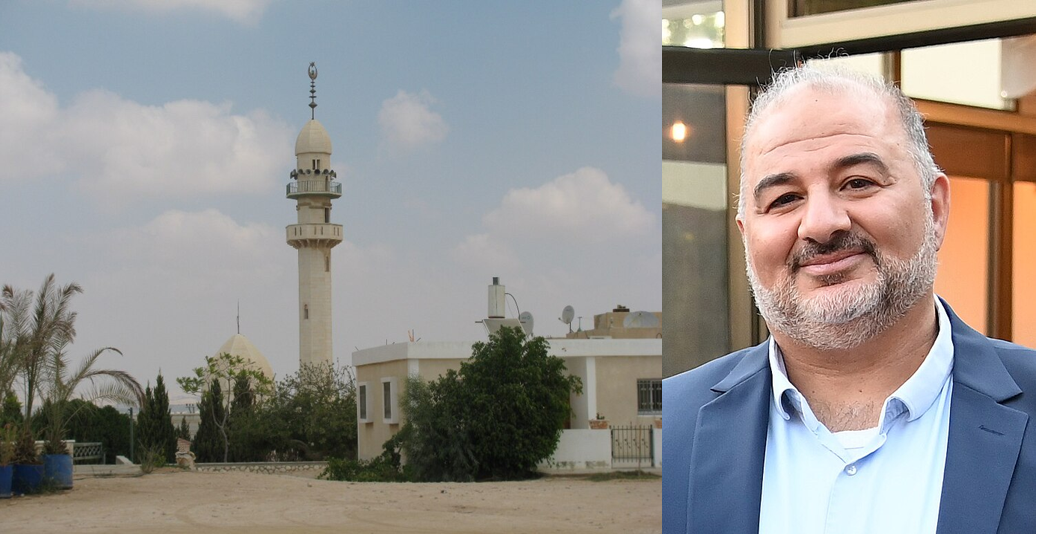
In the elections for the 25th Knesset in 2022, the Ra’am list included Waleed Alhwashla, a young and educated Bedouin candidate. He was born in the Negev in 1981 and is affiliated with the Islamic Movement. The election of Alhwashla, who holds a master’s degree in political science from the University of Haifa,[12] reflects the Islamic Movement’s policy of promoting young Bedouins to key positions in Israeli politics.
Bedouin society has rallied around candidates placed in realistic positions and continued to support Ra’am because it granted them representation within the top four spots on the list. Ra’am enjoys relatively broad support because, among other reasons, it maintains continuous long-term ties with Bedouin society in the Negev and reserves a realistic position on its list for a Bedouin candidate from the Negev.
Summary and Conclusions
The major political transformations within Arab society in Israel took place thanks to the historic achievement of Abd al-Wahhab Darawshe, founder of the first independent Arab political body in Israeli politics. Following the establishment of Mada—the Arab Democratic Party—in 1988, new Arab parties emerged, including Ra’am, Balad, and Ta’al.
Ra’am, which serves as the political arm of the southern branch of the Islamic Movement, has established a broad political and religious infrastructure within Bedouin society in the Negev. Thanks to its vigorous efforts, Sheikh Hammad Abu-Daabes from the Bedouin city of Rahat served as head of the southern branch of the Islamic Movement from 2010 to 2022. Ra’am is the most popular list among the Bedouins in the Negev, according to the results of Knesset election campaigns since 1996.
Ra’am consistently allocates a realistic position on its list to members of the Islamic Movement in the Negev, while at the same time the southern branch of the movement provides the population with social and religious services. In this way, the Islamic Movement and Ra’am succeed in maintaining close ties with Bedouin society in the Negev, and the results can be seen in the Knesset elections, in which Ra’am wins the majority of the Bedouin votes in the Negev. In contrast, the other Arab parties—Balad, Hadash, and Ta’al—have not succeeded in mobilizing substantial electoral support within Bedouin society in the Negev.
It can be assumed that these patterns will change if the Arab parties competing with Ra’am for the votes of Bedouins in the Negev adopt the following strategy:
- Opening up party lists and expanding representation for Bedouin members from the Negev;
- Reserving realistic positions on their lists for Bedouin candidates;
- Increasing the political and social involvement of the parties within Bedouin society in the Negev.
The academic literature on politics shows that parties decline due to a failure to understand developments on the ground and inadequate adaptation to changing realities.[13] One of the main threats facing the Arab parties is the growing political awareness among the young and educated Arab public. They are wondering how to become involved in influencing party lists in the primaries. Such involvement will require the parties to open up membership registration to all Arab citizens without bureaucratic barriers; otherwise, their fate may resemble that of the Arab satellite lists of the Labor Party, which faded away partly because of the growing political awareness among younger and educated generations who were no longer willing to obey the traditional Arab leadership.
Mr. Atia Alrhahla is a doctoral candidate in the Department of Israel Studies at the University of Haifa. He studies Arab and Bedouin politics in Israel, with a focus on local and community leadership.
*The opinions expressed in MDC publications are the authors’ alone.
[1] Atia Alrhahla, “The Arab List for Bedouins and Villagers: Between Social Structure and Political Activity,” Master’s thesis, University of Haifa (2023). [in Hebrew]
[2] The Israel Democracy Institute, Elections for the 12th Knesset, 1988: https://en.idi.org.il/israeli-elections-and-parties/elections/1988/
[3] Asad Ghanem, “Parties and Ideological Currents among the Arab-Palestinian Minority in Israel,” State and Society (2001), pp. 89–114. [in Hebrew]
[4] The Knesset website, Members of the Twentieth Knesset, https://main.knesset.gov.il/mk/apps/mkprevious/main/previous-knesset-mks/mkp-knesset-hist/20
[5] Shaheen Abd al-Rahim Sarsur, “The Joint List – Its Formation, Dissolution, and Reformation: Factors and Processes in the Elections for the 20th–24th Knessets, 2015–21.” Master’s thesis, Bar-Ilan University, Department of Political Science (2021). [in Hebrew]
[6] Rana Eseed, “The Islamic Movement in Israel as a Provider of Social Services: Historical-Social Development and Main Characteristics,” Society and Welfare, 39/4 (2019), pp. 609–628. [in Hebrew]
[7] The Panet website, November 12, 2025, https://panet.com/story/4185124 [in Arabic]
[8] Salwa Alinat, “From Empowerment to Leadership: Women in the Islamic Movement in Israel (1980–2013).” Dissertation submitted for the degree of Doctor of Philosophy, Ben-Gurion University of the Negev (2015). [in Hebrew]
[9] Aziz Haidar (ed.), The Collapse of Arab Local Authorities: Proposals for Reconstruction, Van Leer Institute and Hakibbutz Hameuchad (2010). [in Hebrew]
[10] The Arab48.com website, November 3, 2018, shorturl.at/sO4Gw [in Arabic]
[11] Baker Zoabi, “Hadash has Renewed the List, Now It Remains to Renew the Method,” the Local Call (Siha Mekomit) website, May 18, 2026: https://shorturl.at/XpvZ7 [in Hebrew]
[12] The Knesset website, MK Waleed Alhwashla, https://main.knesset.gov.il/en/mk/Apps/mk/mk-personal-details/1093
[13] Raanan Cohen, Strangers in Their Own Home: Arabs, Jews, State, Dyonon (2006) [Hebrew]; Orna Cohen, “We Cannot Close the Door on Them: The Labor Party and the Decision to Admit Arab Members,” Zmanim: A Historical Quarterly, 135 (2016), pp. 120–132 [Hebrew]; Atia Alrhahla, The Arab List for Bedouins and Villagers: Between Social Structure and Political Activity, Master’s thesis, University of Haifa (2023). [Hebrew]