



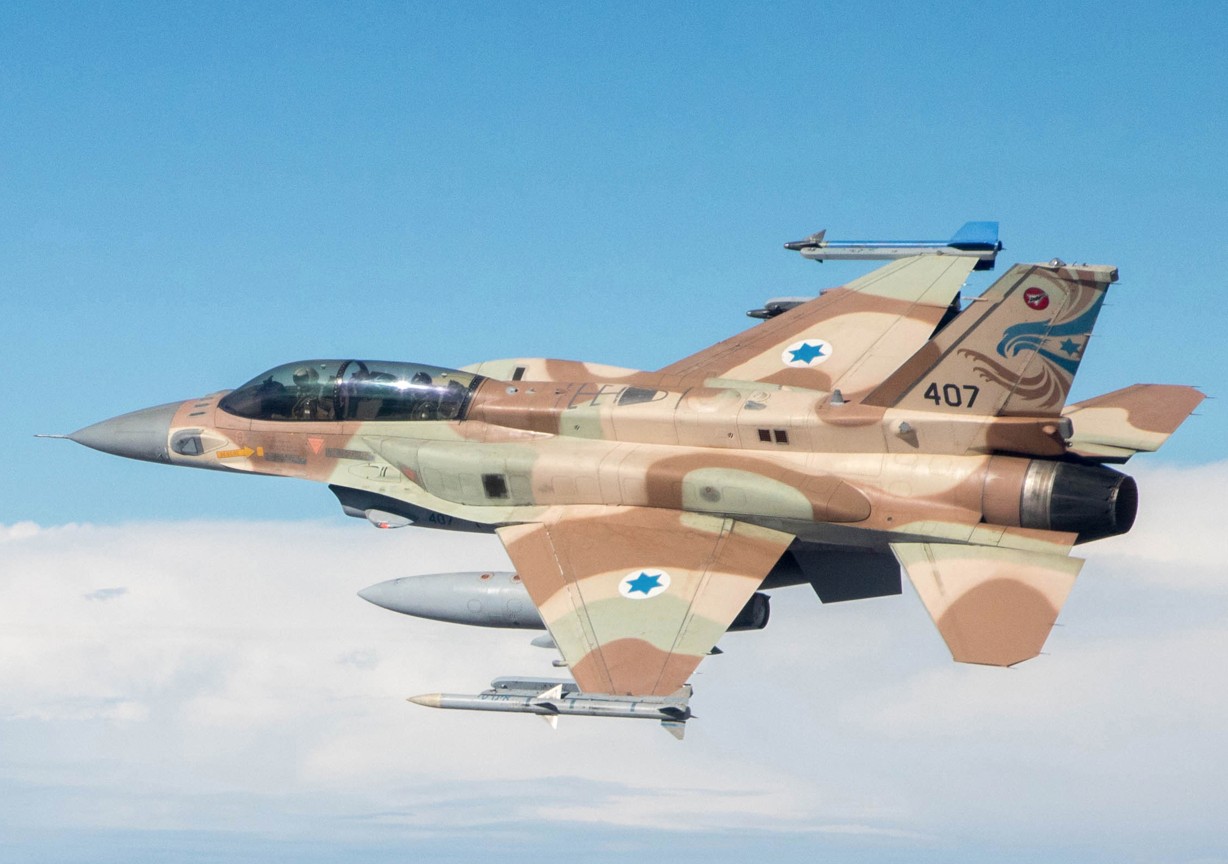

On August 18, 2026, the Israeli Air Force (IAF) carried out a strike on the Abu al-Duhur airbase in northwestern Syria. During the Syrian Civil War (2011-2024) the airbase was taken over from the regime by rebel fighters in 2015 and fell into disrepair.[1] According to Israeli intelligence reports that came out in Israeli media, Turkey was believed to be preparing to take control of the facility and establish a military presence there. Against this backdrop, the Israeli strike was reportedly carried out as a preemptive measure, shortly before Turkish Armed Forces personnel were expected to deploy to the base. The attack targeted the runway, a hangar, and other infrastructure, with no casualties reported. The strike appears to have caught Ankara by surprise and was perceived by Turkey as a potential threat to its national security, particularly given the base’s proximity to the Turkish border. Abu al-Duhur lies just 70 kilometers south of the Turkish border, placing the airbase near Turkish airspace and underscoring its potential strategic significance for Ankara.[2]
The Turkish assessment of the strike’s tactical execution offers insight into Israel’s perceived objectives. Turkish military commentators assess that the IAF used F-15I and F-16I fighter jets armed with 2,000-pound GBU-31 JDAM precision-guided munitions, deliberately withholding its fifth-generation F-35 stealth fighters from the operation. This aircraft selection suggests Israeli military planners actively avoided exposing the F-35’s radar cross-section to “Turkey's advanced, deep-penetration surveillance networks deployed along the southern border.”[3] According to Turkish analysts, aerial refueling tankers and Airborne Warning and Control System (AWACS) aircraft facilitated the strike and monitored the highly congested and politically sensitive airspace, underscoring the operation's high-stakes nature.
Following the attack, Jerusalem acknowledged that it had unofficially warned the Syrian regime against granting the Turkish Armed Forces (TSK) a permanent military presence at the base. From Israel’s perspective, the deployment of Turkish forces at airbases near Aleppo and Idlib would fundamentally alter the regional security status quo and pose an unacceptable threat to Israeli security, particularly because this area is considered part of a key IAF flight corridor toward Iran. Consequently, the strike on Abu al-Duhur was not merely a localized attempt to disrupt Syrian military infrastructure, but also a direct and kinetic expression of strategic deterrence aimed at establishing clear limits for both Damascus and Ankara.[4]
This point, however, requires further elaboration. No state willingly accepts limitations on its military capabilities, regardless of the circumstances. In the realities of geopolitics, friction between states may arise from objectively conflicting strategic interests. Nor is a state necessarily required to justify the pursuit of its own interests or its perception of another state’s interests as incompatible with its own. Serious strategic disagreements, such as the dispute surrounding the Abu al-Duhur strike, do not necessarily mean that two countries are enemies or that they are inevitably headed toward military confrontation. Turkey-Russia relations provide a useful example. In 2015, a Turkish F-16 shot down a Russian Su-24 following an alleged violation of Turkish airspace.[5] Although the incident triggered a serious crisis in bilateral relations, the relationship ultimately endured. Russia and Turkey are neither allies nor outright enemies. Their interests diverge sharply in some areas, including Syria, while converging in others. Their relationship therefore demonstrates that significant strategic rivalry and cooperation can coexist within the same bilateral framework.
Turkish reactions
The official response to the August 18 airstrike combined diplomatic condemnation with avoiding military escalation. State-owned media and government sources responded calmly, describing the attack as a “provocation” and aiming to diplomatically isolate Israel rather than incite retaliation.[6]
The Turkish Ministry of Foreign Affairs (MFA) immediately issued Statement No. 160, condemning the Israeli airstrikes on the Abu Al-Duhur Military Airbase.[7] The MFA characterized Israel's actions as a “reckless continuation of aggression that directly targets Syria's infrastructure and capabilities, while repeatedly violating Syria's territorial integrity and national unity.” Concurrently, Presidential Communications Director Burhaneddin Duran reinforced this institutional stance by condemning the attack via social media platforms, emphasizing that Turkey, under the leadership of President Recep Tayyip Erdoğan, would continue to support Syria's sovereignty against attempts that threaten regional peace.[8]
During its weekly press briefing aboard the TCG Koçhisar in Kocaeli on August 20, 2026, the Ministry of National Defense (MSB) denied that any Turkish military delegation was present at the Abu Duhur airbase before or during the strike. The MSB emphasized that Israel's attacks were intended to undermine Syria's stability and to block its reconstruction efforts.[9]
The Turkish state’s determination to avoid escalation and instead rely on diplomatic rebukes is deeply rooted in the concept of strategic restraint or moderation (Stratejik İtidal).[10] This strategic moderation is not a written doctrine, but an institutionalized principle intended to prevent potential drawbacks. It serves as a hedge against other trends in Turkish policy that may appear aggressive.[11]
Turkish geopolitical analysts assessed that the Abu Al-Duhur strike was effectively a political trap set by Israeli Prime Minister Benjamin Netanyahu ahead of the October 27, Israeli general elections. The Turkish state identified the strike as Netanyahu’s “election investment” (Seçim Yatırımı) strategy. [12]
While the official state response was disciplined, unofficial reactions across Turkish media - nationalist, secularist, and defense outlets - were more intense, reflecting public outrage and political calculations. Both informal and professional media aimed to demonstrate technological superiority, assert regional dominance, and evaluate domestic implications of escalating with Israel.
A distinct defense and technology-oriented media narrative also emerged in the aftermath of the strike. Outlets with a strong focus on defense and national security, such as OdaTV, framed the incident primarily as a demonstration of Turkey’s military and technological capabilities rather than focusing on the damage inflicted on the Syrian airbase.[13]The narrative shifted to Turkey’s capacity to electronically monitor and potentially intercept Israeli incursions, emphasizing the capabilities of the ASELSAN-produced ALP 300-G and ALP 100-G ground-based radar systems, alongside the Boeing E-7T Airborne Early Warning and Control (AWACS) aircraft.[14] Notably, media outlets affiliated with Turkish defense industries’ boasting of radar capabilities confirms Israel’s explanations for the reasons behind the strike.
The ALP 300-G AESA S-band radar, using gallium nitride tech, can track low-visibility targets and ballistic missiles over long distances. Akyol noted it can detect the International Space Station at 700 km. The ALP 100-G tracks low-altitude targets up to 200 km, while Kalkan-II X-band radars detect targets up to 120 km. The E-7T's MESA radar can track 1,500 targets within 400 km at an altitude of 10,000 meters.[15]
By providing detailed accounts of the capabilities and performance parameters of Turkish air defense systems, the Turkish media appeared to direct much of its messaging toward a domestic audience. This coverage sought to reassure the public that the Turkish military retained a high degree of situational awareness and operational control, while simultaneously highlighting the achievements of Turkey’s domestic defense industry. Such reporting may also have been intended to mitigate the psychological impact of the Israeli strike and counter any perception of Turkish vulnerability. Alongside the defense-oriented coverage, a distinct nationalist and conservative media narrative also emerged. Conservative and government-aligned outlets, such as Yeni Şafak, framed the strike within the broader context of what they portrayed as an existential struggle over Turkey’s security and regional position. Columnists Kadir Üstün and Yahya Bostan interpreted the Abu Duhur bombing not as a tactical interdiction but as Israel's desperate attempt to assert absolute regional superiority and to maintain a fragmented Middle East.[16] Bostan argued that Israel was seeking to trigger a premature conflict - a “premature birth” (erken doğum), in his words - in order to prevent the Syrian state from consolidating into a stable regional actor capable of defending its borders over the medium to long term.
Yeni Şafak prominently featured quotes from Russian General Apti Alaudinov, [17] who warned that Israel's overreach and its desire to drag the United States into a broader conflict could ultimately precipitate the end of the Israeli state.[18]
Conversely, the opposition media, including the secular Cumhuriyet newspaper and statements from the Republican People's Party (CHP), analyzed the event through a lens of domestic political manipulation and profound skepticism.[19] The CHP leader, Kemal Kılıçdaroğlu, strongly criticized Israel’s actions as a reckless threat to the entire country.[20]
However, Yılmaz Polat of Cumhuriyet urged the Turkish public not to be drawn into what he described as war hysteria fueled by the country’s political elite. He argued that the ruling Justice and Development Party (AKP) might exploit the threat of an imminent conflict with Israel to push for early elections.[21]
Turkey's Strategy in Syria: Proclaimed Goals vs. Ground Realities
To put the Israeli strike in context, one must understand how Turkey's strategic objectives in Syria evolved after the tectonic shifts of late 2024 and the transition to the post-Assad environment. Turkish analysts view Israel’s activities in Syria as threats to Syria's stability.[22]
Previously, Turkey’s military operations in Syria were primarily driven by border security considerations. To this end, Ankara launched three separate counterterrorism operations aimed at neutralizing the threat posed by the Kurdistan Workers’ Party (PKK) and its Syrian affiliate, the People’s Protection Units (YPG).
With the successful takeover of the new Syrian Transitional Government in December 2024, Turkey officially withdrew from most of the areas it had occupied in successive offensive operations starting in 2019. However, under the new paradigm, Turkey transitioned from a border-securing force to the primary architect of Syrian state reconstruction.[23] The cornerstone of this new strategy is the “Single Army” (Tek Ordu) concept, developed for the armed forces of the new Syrian regime. Rather than perpetuating a fragmented landscape of armed factions and proxy militias, Ankara pursued a military and defense cooperation framework aimed at consolidating these groups into a unified Syrian national army under the authority of Damascus.
Implementing this defense agreement requires reactivating degraded Syrian military infrastructure, including electronic warfare systems, air defense networks, and critical airbases such as Tiyas (T4) in Homs and Abu Al-Duhur in Idlib.[24] The stated goal of Turkish policy is to provide military training, technical support, and capacity-building assistance to ensure the territorial integrity and internal stability of its southern neighbor, thereby facilitating the return of millions of refugees and preventing the resurgence of terrorist enclaves.[25]
Turkish policies in Syria: Reality vs Statements
In principle, Turkey’s officially proclaimed goals in Syria are legitimate and, in themselves, neither threatening nor aggressive, even though Syrian territories were under Ottoman rule for four centuries. However, the realities on the ground present a different picture. It is at this point that friction between Ankara and Israel begins to emerge.
Although Turkish officials denied that a permanent military delegation or base was being established at Abu Al-Duhur, the logistical and operational reality is that rebuilding Syrian airbases is inherently tied to Turkish military architecture. By integrating Syrian radar and communication networks with Turkish systems, Turkey is effectively extending its Anti-Access/Area Denial (A2/AD) air defense umbrella deep into Syrian territory under the guise of sovereign Syrian reconstruction.
The Syrian Armed Forces are expected to remain heavily dependent on Turkish weapons, military equipment, training, and intelligence support.[26] According to foreign assessments, as well as statements by Turkish officials and analysts, this growing dependence is gradually undermining Syria’s autonomy in security and defense affairs, effectively transforming the country into a de facto Turkish protectorate.[27]Such a situation is unacceptable to Israel, regardless of which Israeli government is in power.
The uncomfortable reality, however, is that official Turkish statements and much of the accompanying media discourse obscure the extent to which conditions on the ground diverge from Ankara’s stated vision for Syria. At the heart of this discrepancy lies a persistent vacuum of state authority. Although formal institutions have gradually been established, their existence does not necessarily translate into effective governance across the country. Damascus has established a People’s Assembly as part of the transitional political process, while a package of security appointments announced in July 2026 further centralized the security apparatus under Anas Khattab. Yet these institutions remain heavily dominated by figures associated with Hayat Tahrir al-Sham (HTS), and the central government’s effective authority beyond Damascus remains severely constrained.[28] Turkey and Qatar have publicly advocated the unification of Syria and the creation of a single national army, but political declarations have thus far outpaced developments on the ground. Al-Sharaa has yet to demonstrate that his government can peacefully consolidate the diverse armed factions, tribal structures, and local centers of power operating across the country, particularly in southern Syria.
The weakness of central authority is compounded by persistent insecurity and violence that extend across Syria and cannot be reduced solely to peripheral instability or confessional conflict.[29] Sectarian tensions nevertheless constitute a particularly serious dimension of this broader security crisis. Coastal and central Syria have emerged as major centers of sectarian and retaliatory violence, with reports documenting continued revenge killings and sectarian murders throughout 2026.[30] At the same time, jihadist militancy remains another significant obstacle to stabilization. Al-Sharaa’s HTS itself emerged from Syria’s jihadist milieu and traces its organizational origins to al-Qaeda’s former Syrian affiliate, while ISIS has continued to wage an insurgency against Syrian transitional security forces in eastern Syria, with an increase in attacks reported since February 2026.[31] Although ISIS operates under considerable organizational and financial pressure and has reportedly resorted in some cases to recruiting teenagers for relatively small payments, it retains the capacity to conduct persistent low-level attacks. UN assessments from early 2026 estimated that approximately 3,000 ISIS fighters remained active, the majority of them in Syria.[32] Taken together, the weakness of state institutions, fragmented political and military authority, sectarian violence, and the continuing jihadist threat reveal a substantial gap between the vision of a unified and stable Syria promoted by Ankara and the realities prevailing on the ground.
Against this backdrop, Israel’s objective is not to obstruct Syria’s political or territorial consolidation, particularly since such a process has yet to materialize in any meaningful sense. Rather, Jerusalem’s approach to Syria reflects a set of strategic principles that have become increasingly prominent since December 8, 2024. Foremost among them is Israel’s determination to prevent the emergence of another jihadist threat capable of carrying out mass violence against Israeli citizens or communities it regards as allies, particularly the Druze in southern Syria. The violence in Suwayda reinforced existing fears among Syrian minorities regarding their vulnerability in the absence of effective state protection.[33] Against this background, claims that the Druze themselves constitute an obstacle to Syrian consolidation overlook the security concerns underlying their position. From Israel’s perspective, preventing the emergence of a jihadist-controlled security vacuum immediately north of its border therefore requires maintaining the capacity to intervene militarily in Syrian territory when necessary.[34] A second principle concerns the military balance itself. Israel seeks to prevent potentially adversarial armed forces or military capabilities from becoming established in Syria in ways that could constrain its freedom of action or challenge its air superiority. Seen in this light, Israeli military activity in Syria is intended not to prevent the emergence of a functioning Syrian state, but to shape the security environment during a period in which effective central authority remains weak. The underlying rationale is preventive. By establishing and enforcing security red lines before potentially hostile military capabilities become entrenched near its borders, Israel seeks to reduce the risk of a more dangerous confrontation at a later stage.[35]
Conclusion
The Israeli strike on the Abu Al-Duhur airbase in Syria prompted fears that it would escalate a military confrontation with Ankara. Likewise, most think tanks and media argued that the strike was counterproductive and that it would not help Israel drive Turkey out of Syria.[36]
Yet Turkish reactions best explain the strike. The Turkish military intended to install radars at Abu Al-Duhur that could compromise Israel’s freedom of action. Official statements and various informal media outlets offered several explanations, placing the onus exclusively on Israel’s behavior. Overall, Turkish reactions were measured and limited. This Turkish behavior itself debunks the fears that the Israeli attack would lead to an undesired miscalculation. Likewise, boasting by the Turkish defense industries about the quality of their systems corroborates Israeli explanations for why Abu-Al-Duhur air base became a target.
Turkish policies in Syria pursue positive objectives, including unifying and stabilizing Syria and establishing a unified army. These goals do not conflict with Israel’s interests. However, friction between Ankara and Jerusalem arises amid Syria’s irresolvable problems. Insecurity, including the presence of jihadis, reigns in Syria to the point that no region is calm. The Syrian state exists only nominally and lacks functioning institutions. To date, Ankara has done nothing to dispel not only Israel’s but also Syrian minorities’ fears that it cannot control its proxy, Al-Sharaa’s HTS.
The agreement between the Kurdish-led Syrian Democratic Forces (SDF) and Damascus was reached under considerable pressure from both the United States and Turkey. Rather than being regarded as evidence of Syria’s political and territorial consolidation, the agreement has been widely interpreted as a capitulation by the Kurdish forces. Moreover, it has done little to alleviate concerns among Syria’s minority communities. The dissolution of the SDF effectively eliminated the principal secular military force that had provided protection to minority populations in northern and eastern Syria. Consequently, these communities have become increasingly vulnerable to the policies and actions of the new Syrian authorities and their affiliated armed groups.[37]
Under these circumstances, a Turkish military presence would only reinforce the sense of instability and insecurity.
Thus, it appears that Israel will continue to take measures to prevent the emergence of new threats near its borders. Israeli officials have made it clear that Jerusalem won’t allow another massacre of minorities near its borders. For now, it seems that Ankara and Damascus have received that message, as evidenced by the ongoing stalemate in Suweida.
The mere existence of military friction does not necessarily mean a military collision. Ankara’s behavior and statements have always been nuanced and calculated, and nothing suggests that Turkey is interested in a military confrontation with Israel. Of course, caution and awareness of the limits of power are indispensable, yet no country is expected to give up its vital interests because another party doesn’t like it. In light of Ankara’s current stance towards Israel, and vice versa, it remains to be seen whether Turkey, Syria, and Israel will move beyond the friend or foe narrative and seek out overlapping goals, such as preventing the re-emergence of non-state actors or allowing long-term power vacuums to emerge.
Maj. (res.) Alexander Grinberg is an Iran and Middle East expert at the Jerusalem Institute for Strategy and Security. He holds academic degrees in Middle Eastern and Islamic Studies and in Arabic Language and Literature from the Hebrew University of Jerusalem. His work focuses on Iran, the broader Middle East, and geopolitics, and he also has expertise in applied linguistics. He is fluent in Persian, Arabic, Turkish, French, Spanish, Russian, and Hebrew.
*The opinions expressed in MDC publications are the authors’ alone.
[1] Washington Post, “Insurgent Attack on Syrian Airbase Kills 56 Soldiers,” September 11, 2015.
[2] “Ebu Zuhur saldırısı: İsrail Suriye’deki provokasyonlarıyla ne hedefliyor?” Anadolu Agency (AA), August 21, 2026.
[3] Ibid.
[4] Gamze Bal, “İsrail neden Ebu Zuhur’a saldırdı?” Tercüman, August 21, 2026.
[5] “Turkey’s Downing of Russian Warplane – What We Know,” BBC News, December 1, 2015.
[6] See endnote 2.
[7] Ministry of Foreign Affairs of the Republic of Türkiye, “Suriye’de Ebu Zuhur Askeri Hava Üssü’ne Gerçekleştirilen Saldırı Hk.,” Press Release No. 160, August 18, 2026.
[8] “Israel’s Airstrike on Abu Zuhur Airbase in Syria (August 2026),” Küre Encyclopedia, August 18, 2026 [Accessed October 11, 2026].
[9] Ibid.
[10] Gamze Bal, “İsrail neden Ebu Zuhur’a saldırdı?” Tercüman, August 21, 2026.
[11] Can Donduran, “İtidalli Orta Güçler İçin Bir Güvenlik Stratejisi Olarak Risk Dengeleme (Hedging): Türkiye Örneği,” Marmara Üniversitesi Siyasal Bilimler Dergisi [Marmara University Journal of Political Science] 13, no. 1 (March 2025) [Note: Link will download the PDF].
[12] See fn 2.
[13] “Yüzlerce kilometrelik gözetleme ağı: F-35’lere karşı Türkiye’den hamle... Ebu Zuhur sonrası gözler Türk radarlarında,” Odatv, September 29, 2026.
[14] Ibid.
[15] Ibid.
[16] Kadir Üstün, “Ebu Zuhur saldırısı: İsrail’in bölgesel üstünlük arayışı,” Yeni Şafak, August 26, 2026.
[17] Yahya Bostan, “İsrail’e karşı radikal adımlar,” Yeni Şafak, August 21, 2026.
[18] “Russian General Warns Israel’s Overreach Could End Its Statehood,” Yeni Şafak, August 20, 2026.
[19] “İsrail, İdlib’deki Ebu Zuhur Askeri Havaalanı’nı vurdu,” Cumhuriyet, August 18, 2026.
[20] Republican People’s Party (CHP), “CHP Genel Başkanı Kemal Kılıçdaroğlu’ndan Netenyahu’ya Sert Tepki,” August 21, 2026.
[21] Cumhuriyet, “İsrail Türkiye sınırındaki Ebu Zuhur askeri üssünü neden vurdu? Saldırıdan ABD’nin...” Facebook video, August 20, 2026.
[22] Gamze Bal, “İsrail neden Ebu Zuhur’a saldırdı?” Tercüman, August 21, 2026.
[23] Ibid.
[24] “İsrail’in ‘Ebu Zuhur’ saldırısı ne anlama geliyor?,” Bianet, August 19, 2026.
[25] “Israel’s Airstrike on Abu Zuhur Airbase in Syria (August 2026),” Küre Encyclopedia, August 18, 2026.
[26] “Terör örgütü Fırat’ın doğusundan da silinecek: Mehmetçik girmeden sökülüp atılacaklar,” Türkiye Gazetesi, January 18, 2026; “Suriye’de Ne Oldu/Oluyor, Suriye’yi Nasıl Bir Gelecek Bekliyor?” Ehlen, March 12, 2025; “MSB: Suriye’nin siyasi birliğini, toprak bütünlüğünü savunuyoruz,” Anadolu Agency (AA), August 14, 2025.
[27] Ministry of Foreign Affairs of the Republic of Türkiye, “Dışişleri Bakanı Sayın Hakan Fidan’ın TV100’e Verdiği Mülakat, 14 Mart 2025,” interview on TV100, March 14, 2025; Ahmad Sharawi and Justin Leopold-Cohen, “Syria’s Military Is Rebuilding, but Foreign Influence May Slow Security Progress,” Foundation for Defense of Democracies (FDD) – Long War Journal, September 17, 2026.
[28] “Syria Completes Formation of Transitional People’s Assembly After al-Sharaa Appoints Final 70 Members,” Al-Arabiya, July 2, 2026 [Arabic]; Shaam Network, “Shaam Economic Report | August 8, 2026,” August 8, 2026 [Arabic].
[29] “Security Tensions in Rural Damascus Reignite Debate over Challenges of Syria’s Transitional Phase,” BBC News Arabic, August 3, 2026 [Arabic]; CNN Arabic, “Syria: Injuries reported after an explosive device detonated on a bus belonging to the Internal Security Forces,” August 22, 2026 [Arabic]; BBC News Arabic, “14 injured in Jaramana bus bombing; investigations underway to uncover those responsible,” August 7, 2026 [Arabic].
[30] Syrian Observatory for Human Rights (SOHR), “Coinciding with the Bloody Attack East of Hama, a New Attack in Its Western Countryside Kills Two More Members of the Alawite Community,” June 8, 2026 [Arabic]; Al-Hal Net, “Impunity Exacerbates Revenge Killing and Sectarian Division in Syria,” August 4, 2026 [Arabic].
[31] “ISIS Attacks Resume in Eastern Syria After Announcement of a ‘New Phase’ of Operations,” Kurd Online, February 25, 2026 [Arabic].
[32] “‘ISIS’ in Syria: Tactical Lull and a Shifting Map of Attrition,” Noon Post, August 23, 2026 [Arabic].
[33] “Protecting Our Brothers’ Brothers, the Druze in the Druze Mountain,” Channel 14, July 17, 2025 [Hebrew].
[34] “Katz to Sharaa: Golan Is Eternal Part of Israel, We Won’t Pull Out of Syria Buffer Zone,” Times of Israel, September 23, 2026.
[35] “We Will Not Tolerate a Turkish Military Presence Extending Southward, Because It Threatens Us,” Zman Israel, August 19, 2026 [Hebrew].
[36] Institute for National Security Studies (INSS), “Israel’s Red Line in Syria – and the Price of Confrontation with Turkey,” August 25, 2026 [Hebrew].
[37] “The Challenge of Protecting Religious Minorities in Syria – Part 1,” Juicy Ecumenism, February 24, 2026; Christian Solidarity Worldwide (CSW), “General Briefing: Syria,” September 2026.