



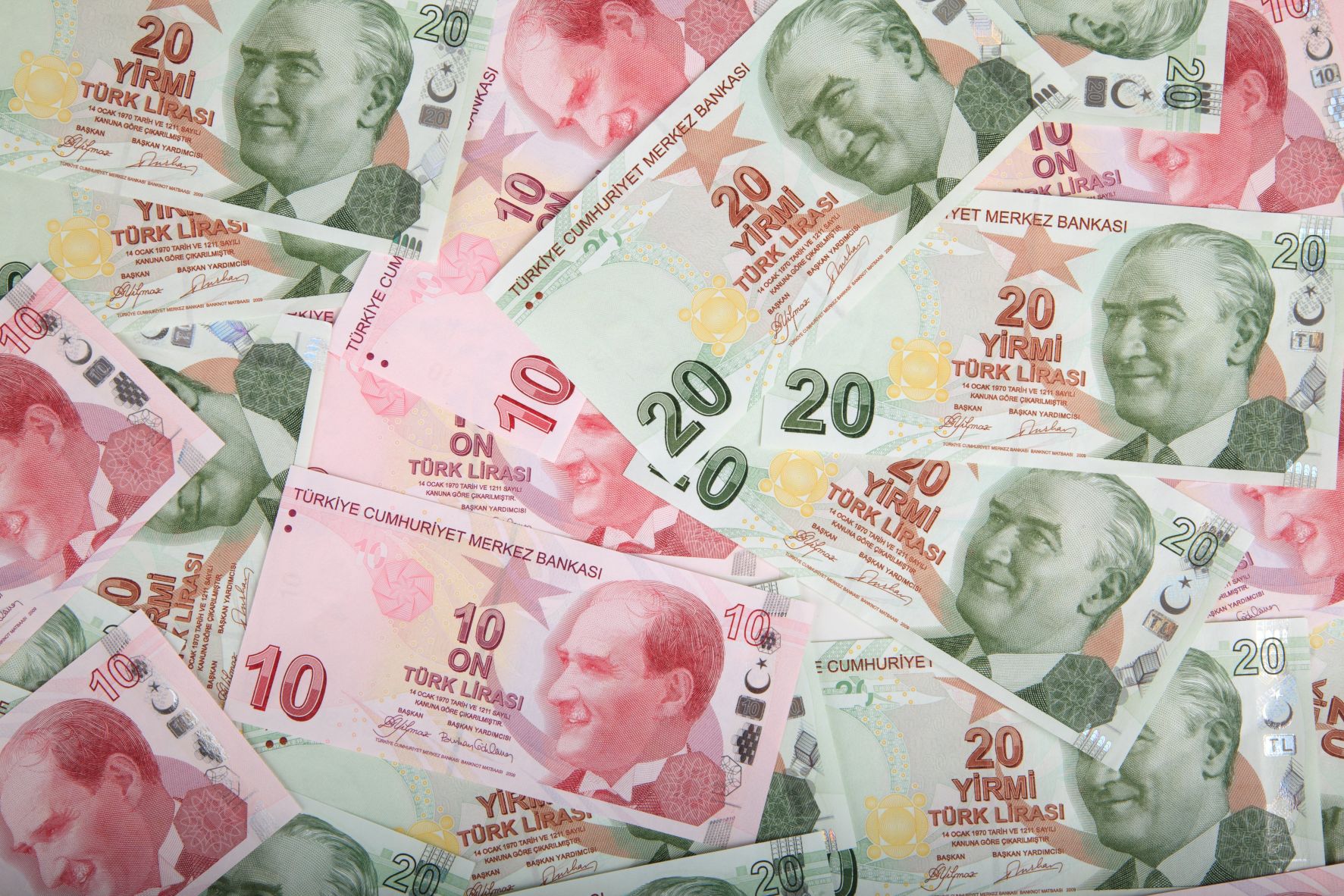
Turkey's regional ambitions rest on an uneasy foundation. Over the past two decades, Ankara has sought to convert rapid growth and foreign capital into diplomatic reach, military capability, and independent foreign-policy action, projecting power across the Middle East, Eastern Mediterranean, Caucasus, Central Asia, the Balkans, and the Horn of Africa.
In pursuing this objective, Turkey expanded its defense industry, established overseas military bases, increased its use of military diplomacy, and assumed a more assertive role across multiple regional theaters. Yet these geopolitical aspirations have often exceeded the country's economic capacity to sustain them over the long term. This ambition has repeatedly collided with a more fragile economic reality: chronic current-account deficits, dependence on short-term foreign financing, and recurring currency crises that expose how much of Turkey's regional activism has been financed rather than earned. Understanding Turkey's foreign policy therefore requires understanding its economy first. Economic constraints have not merely limited Ankara's strategic options; they have also shaped the timing, intensity, and sustainability of its regional initiatives. Turkey's external behavior cannot be fully understood without recognizing the persistent interaction between geopolitical ambition and economic vulnerability.
From Convergence to Crisis
The economic policy pursued by President Recep Tayyip Erdoğan served as a textbook example of why economic theory matters and what happens when its fundamental principles are ignored. Guided by his unorthodox belief that high interest rates cause, rather than curb, inflation, Erdoğan repeatedly pressured the Central Bank to lower interest rates even as inflation accelerated and the Turkish lira came under intense depreciation. Rather than responding to the currency's decline with the monetary tightening prescribed by conventional economics, his government persisted with interest rate cuts that ran counter to mainstream economic theory. The resulting loss of investor confidence, capital flight, and sharp currency depreciation underscored the economic costs of subordinating monetary policy to political preferences.[1],[2]
Between 1990 and 2004, only about $1 billion flowed into Turkey as foreign direct investment (FDI) in an average year. By 2006, FDI increased to approximately $20.2 billion, placing Turkey among the leading developing-country recipients of foreign investment.[3] In 2005 and 2006, FDI inflows amounted to approximately $29 billion. About $10.5 billion of this total entered commercial banking, while other major transactions included Türk Telekom, Telsim, and Turkcell.[4] Turkey's economic performance in those years was impressive. Real GNP grew by 7.9 percent in 2002, 9.9 percent in 2004, 7.6 percent in 2005, and 6 percent in 2006. At the same time, inflation fell from 68.5 percent in 2001 to 29.7 percent in 2002, 9.4 percent in 2004, and 7.7 percent in 2005.[5]
However, the FDI was directed to acquisitions of banks, telecommunications companies, and real-estate purchases, which did not produce additional export capacity. Moreover, the Turkish Lira appreciated as a result of foreign currency inflows, which created a foreign trade imbalance (imports exceeded exports).[6]
The global financial crisis of 2008 and the subsequent interest rate cuts in the United States and Europe made international funding abundant. Turkey recovered rapidly, and credit-fueled domestic demand expanded. By 2011, the current-account deficit had reached almost 10 percent of the GDP, whereas an OECD assessment concluded that a sustainable benchmark was probably somewhere between 3 percent and 5.5 percent.[7]
The quality of financing was also deteriorating. In 2012, gross inflows reached approximately $70 billion, or 9 percent of the GDP, but debt inflows were increasing and short-term borrowing remained the predominant form of financing. The IMF estimated Turkey's gross external-financing requirement at approximately 28 percent of GDP in 2013. In other words, Turkey's banks and companies also had to refinance a large volume of the current year's deficit as well as previously accumulated obligations.[8]
The international environment began to turn in May 2013, when the US Federal Reserve signaled that it would gradually increase interest rates. As American interest rates were expected to rise, investors had less reason to accept the additional currency and political risks associated with emerging-market assets. This policy reversal affected many developing countries,[9] but Turkey was especially exposed because of its large current-account deficit and dependence on short-term financing. IMF analysis found that pressure on the Lira was unusually sensitive to both global risk sentiment and interest rates in advanced economies.[10]
Following the attempted coup of July 2016, the government relied heavily on fiscal incentives, public guarantees, and rapid credit expansion to restore growth. Output recovered in 2017, but the expansion pushed the economy beyond its sustainable capacity. By 2017, inflation was close to 12 percent, and the current-account deficit exceeded 5 percent of GDP. Foreign-exchange reserves covered only around half of Turkey's gross external-financing requirement, while the private sector remained heavily exposed to foreign-currency debt.[11]
The Lira crisis of 2018 was triggered by declining capital flows interacting with macroeconomic imbalances and policy weakness.[12] As a result of the capital outflows, households and firms that expected inflation and depreciation attempted to protect themselves by moving savings from lira deposits into dollars, euros, gold, property, and inventories. That is, from the exchange market's perspective, a Turkish household buying dollars places the same downward pressure on the Lira as a foreign portfolio investor selling a Turkish bond.
In 2021, under presidential orders, the central bank reduced interest rates even though inflation was rising. Once expected inflation exceeded the return offered on lira deposits and securities, holding the national currency became increasingly costly. Borrowing in Lira was attractive because inflation eroded the real value of the debt, while saving in Lira became unattractive because inflation eroded its purchasing power. The IMF concluded that these deeply negative real interest rates encouraged Lira borrowing and capital flight, while the government increasingly relied on regulations, subsidized credit, foreign-exchange intervention, and exchange-rate-protected deposits to contain the consequences.[13] Consequently, the inflation, which had remained mostly in single digits during the mid-2000s, rose to 20.3 percent in 2018, 36.1 percent in 2021, 64.3 percent in 2022, and 64.8 percent in 2023.[14]
The resulting depreciation of the Turkish lira significantly increased the cost of imported machinery, energy, and intermediate goods. Given Turkey's heavy reliance on imported inputs across nearly all sectors of the economy, these higher costs quickly spread beyond directly imported products. Manufacturing, transportation, construction, food production, and a wide range of service industries all experienced rising production and operating expenses, contributing to broader inflationary pressures throughout the economy.
Expectations made this transmission stronger. A firm that expects the exchange rate to remain stable can absorb part of a temporary currency movement or delay changing its prices. A firm expecting continued depreciation is more likely to set prices according to the anticipated cost of replacing its inventory. Workers seek more frequent wage adjustments, landlords revise rents, and suppliers shorten contracts. Central-bank research emphasizes that pass-through rises when depreciation is regarded as persistent, when demand is strong, and when inflation expectations are poorly anchored.[15]
The expectation produced a self-reinforcing cycle. Low real interest rates encouraged spending and discouraged Lira saving. Demand for foreign currency weakened the Lira. Depreciation raised import and production costs. Higher inflation further reduced the expected return on lira assets and encouraged additional dollarization. Attempts to slow the depreciation through reserve sales could temporarily stabilize the market but could not permanently resolve the underlying inconsistency between interest rates, inflation, and exchange-rate expectations. The central bank lost approximately $30 billion in international reserves between January and May 2023 while attempting to manage these pressures.[16]
Following the May 2023 elections, the appointment of Mehmet Şimşek as Minister of Treasury and Finance on June 4, 2023, marked the beginning of a policy reversal that brought this phase to an end, though not the accumulated consequences of the preceding years. Interest rates were raised, many regulatory distortions were gradually removed, and the return on Lira assets moved back into positive real territory. Confidence and reserves recovered, while the current account narrowed. Nevertheless, disinflation was slow: year-end inflation declined from 64.8 percent in 2023 to 44.4 percent in 2024 and 30.9 percent in 2025, still far above the official 5 percent target.[17]
Turkey failed to complete the transition from catch-up growth to productivity-led growth. During the first stage of development, a country can grow rapidly by restoring macroeconomic stability, moving workers from low-productivity agriculture into industry and services, importing machinery, building infrastructure, attracting foreign capital, and increasing labor-force participation. These changes do not require the country to operate at the technological frontier. They require it mainly to use more capital and labor and to adopt technologies already developed elsewhere.
Becoming a high-income economy requires a more difficult second transition. Growth must increasingly come from improvements in productivity: better management, technological innovation, advanced skills, efficient allocation of capital, competition, reliable institutions, and the creation of complex products and services. The World Bank concluded that although Turkey's integration into global value chains contributed to its earlier advance, its exports remained insufficiently sophisticated and generated limited innovation earnings. The OECD similarly finds that Turkey's growth approached its limits. Productivity growth has slowed, the economy remains concentrated in medium-technology industries, and it remains weak in high-skill manufacturing and services.[18]
Turkey possesses a large industrial base, an extensive physical infrastructure, capable private firms, and a substantial domestic market. Its more fundamental weakness is the institutional environment. The institutional weakness is manifested by a low level of economic freedom,[19] a high level of corruption,[20] and a relatively low level of education.[21] All were found to hamper growth.[22]
Networked Power Projection
The strong economic growth and financial stability of the early Justice and Development Party (AKP) years provided Ankara with both the resources and the confidence to expand its diplomatic, commercial, and military influence. Although Turkey's defense spending remained relatively modest by NATO standards - reaching approximately $30 billion, or 1.9 percent of GDP, in 2025 - the country's improved economic position enabled sustained investments in defense modernization, indigenous military production, and a more assertive regional foreign policy.
Nevertheless, the growth model also made that power projection dependent on continued access to foreign currency. Energy imports, foreign-currency debt, defense-related imports, and the wider requirements of an import-intensive economy cannot be financed indefinitely in Lira. Turkey's search for diversified partnerships, with Europe, the Gulf states, Russia, China, and other actors, must therefore be understood not only as a geopolitical choice but also as an effort to manage a persistent external-financing constraint. Such partnerships can provide trade, investment, credit, currency swaps, or temporary reserve support. They can expand Ankara's freedom of action, but they cannot fully substitute for the domestic saving, productivity, price stability, and export capacity required to place Turkish power on a sustainable economic foundation.
Turkey's prolonged inflation, currency depreciation, low domestic savings, and dependence on external finance have not ended Ankara's regional activism. Instead, the government has developed a relatively economical model of "networked power projection," combining domestic military capabilities with arms exports, foreign investment, currency arrangements, host-country access, military training, and local partners. This distributes part of the financial and operational burden among customers, allies, and host governments.[23]
The defense industry is central to this model. Turkish drones, armored vehicles, naval systems, and munitions generate export revenue, but their strategic value exceeds their direct financial contribution. Sales create longer-term relationships involving training, maintenance, software, intelligence, and spare parts. They also produce domestic political benefits by presenting technological and military achievements as evidence of national resurgence despite falling real incomes.[24]
Turkey pursues "autonomy through interdependence." Europe remains its essential market and technological anchor; Russia supplies energy and bargaining opportunities; and China offers trade, infrastructure links, and limited financial diversification. In the Gulf, Qatar functions as Turkey's closest strategic partner, providing investment, central-bank support, defense cooperation, and a permanent military foothold. Relations with Saudi Arabia and the United Arab Emirates are more transactional: Ankara exchanges political de-escalation, commercial access, and defense technology for investment, liquidity, and markets.[25]
Africa provides another layer of influence. Turkey combines airlines, construction, aid, education, diplomacy, arms sales, and military training. TURKSOM in Somalia (Turkish-Somali training center) institutionalizes long-term security cooperation, while the Libyan intervention demonstrated how drones, advisers, and local allies could alter a conflict without a massive Turkish deployment.[26]
This architecture also shapes competition with Israel. Turkey's open support for Hamas generates ideological and domestic political returns, while Turkish activity in Syria, Libya, Qatar, Somalia, and the eastern Mediterranean increasingly overlaps with Israeli interests.[27] Strategic partnerships stretch Ankara's resources and sustain influence, but they cannot permanently substitute for price stability, productivity, technology, and a civilian export base capable of generating dependable foreign currency.
Summary
Turkey's regional power cannot be understood apart from its economic history. Two decades of boom, imbalance, and crisis have left Ankara resourceful but not self-sufficient: capable of projecting influence through drones, diplomacy, and diversified partnerships, yet still dependent on the very external financing that has repeatedly destabilized its currency and constrained its choices. Turkish power projection remains a function of external liquidity rather than domestic productive capacity, and the Turkish population has historically borne its costs.
Looking ahead, the central question is not whether Turkey will remain an influential regional actor, but whether it can sustain its ambitions without fundamentally transforming the economic foundations on which they rest. As long as domestic savings remain low, productivity growth weak, inflation structurally elevated, and external financing indispensable, Ankara's room for strategic maneuver will continue to depend partly on international financial conditions and the willingness of foreign partners to provide capital, investment, and liquidity. Economic stabilization can alleviate these constraints, but only sustained structural reforms capable of raising productivity, strengthening institutions, and expanding high value-added exports can reduce them permanently.
Turkey is therefore likely to remain a consequential middle power whose geopolitical influence exceeds the strength of its economic fundamentals. Its expanding defense industry, diversified diplomatic partnerships, and growing military presence abroad have enabled Ankara to project influence at relatively modest cost. Yet durable regional leadership ultimately depends not only on military capabilities or diplomatic activism but also on economic resilience. Unless Turkey completes the transition from capital-driven growth to productivity-driven development, its foreign policy will continue to reflect the tension between strategic ambition and economic vulnerability, forcing policymakers to balance regional aspirations against persistent financial constraints.
Dr. Ronen Bar-El is a lecturer at the Department of Economics and Management of the Open University of Israel. His expertise includes public economics, public policy, and political economy.
*The opinions expressed in MDC publications are the authors’ alone.
[1] Maurice Obsfeld and Paul Krugman, International Economics: Theory and Policy, Global Edition (Pearson Education Limited, 2022).
[2] Refet S. Gürkaynak, Burçin Kısacıkoğlu, and Sang Seok Lee., “Exchange Rate and Inflation under Weak Monetary Policy: Turkey Verifies Theory,” Economic Policy 38, no. July 2023 (2023): 519–60.
[3] Ioannis Grigoriadis and Antonis Kamaras, “Foreign Direct Investment in Turkey: Historical Constraints and the AKP Success Story,” Middle Eastern Studies 44, no. 1 (January 2008): 53–68.
[4] International Monetary Fund, “Turkey: Fifth Review and Inflation Consultation under the Stand-By Arrangement. IMF Country Report 07/161” (Washington, D.C., 2007).
[5] International Monetary Fund, “Turkey: 2007 Article IV Consultation—Staff Report; Public Information Notice on the Executive Board Discussion; and Statement by the Executive Director for Turkey,” IMF Staff Country Reports, 2007.
[6] International Monetary Fund, “Turkey: Fifth Review and Inflation Consultation under the Stand-By Arrangement. IMF Country Report 07/161.”
[7] Oliver Röhn, “Current Account Benchmarks for Turkey,” OECD Economics Department Working Papers No. 988, OECD Economics Department Working Papers (OECD Publishing, September 13, 2012).
[8] International Monetary Fund, “Turkey: Selected Issues; IMF Country Report 13/364; November 4, 2013” (Washington, D.C., 2013); International Monetary Fund, “IMF Policy Paper October 7, 2013 Global Impact and Challenges of Unconventional Monetary Policies” (Washington, D.C., 2013).
[9] Guillermo A. Calvo, Leonardo Leiderman, and Carmen M. Reinhart, “Inflows of Capital to Developing Countries in the 1990s,” Journal of Economic Perspectives 10, no. 2 (1996): 123–39.
[10] International Monetary Fund, “Turkey: Selected Issues; IMF Country Report 13/364; November 4, 2013.”
[11] International Monetary Fund, “Turkey: 2018 Article IV Consultation-Press Release; Staff Report; and Statement by the Executive Director for Turkey,” IMF Staff Country Reports, vol. 18 (International Monetary Fund (IMF), 2018).
[12] John Zutt, Johannes C.M. Panzer et al., “Turkey Economic Monitor : Steadying the Ship,” Turkey Economic Monitor Washington, D.C. : World Bank Group., 2019.
[13] International Monetary Fund, “Republic of Türkiye: 2024 Article IV Consultation-Press Release; Staff Report; and Statement by the Executive Director for the Republic of Türkiye,” International, 2024.
[14] International Monetary Fund.
[15] Okan Akarsu, Emrehan Aktug, and Huzeyfe Torun, “Inflation Expectations and Firms’ Decisions in High Inflation: Evidence from a Randomized Control Trial,” SSRN Electronic Journal, 2025.
[16] International Monetary Fund, “Republic of Türkiye: 2024 Article IV Consultation-Press Release; Staff Report; and Statement by the Executive Director for the Republic of Türkiye.”
[17] TCMB, “Türkiye Cumhuriyet Merkez Bankası: Consumer Prices,” Consumer Prices, n.d.
[18] The World Bank, “Leveraging Global Value Chains for Growth in Turkey: A Turkey Country Economic Memorandum,” World Bank, March 2, 2022; OECD, “OECD Economic Surveys: Türkiye 2025,” OECD Economic Surveys: Türkiye, 2025 (April 10, 2025).
[19] “The Heritage Foundation, “Index of Economic Freedom,”, Economic Freedom, 2026,
[20] Transparency International, “Corruptions Perceptions Index 2013,” 2014; Transparency International, “Corruption Perceptions Index 2025,“ 2026.
[21] OECD, “PISA Scores by Country 2022,” 2026.
[22] Eric A. Hanushek et al., “Returns to Skills around the World: Evidence from PIAAC,” European Economic Review 73 (2015): 103–30; Eric A. Hanushek and Ludger Woessmann, “The Role of Cognitive Skills in Economic Development,” Journal of Economic Literature 46, no. 3 (September 2008): 607–68; Eric A Hanushek et al., “Do Better Schools Lead to More Growth? Cognitive Skills, Economic Outcomes, and Causation,” Journal of Economic Growth 2012 17:4 17, no. 4 (July 14, 2012): 267–321; Paolo Mauro, “Corruption and Growth,” The Quarterly Journal of Economics 110, no. 3 (August 1, 1995): 681–712; Daron Acemoglu and Murat Ucer, “The Ups and Downs of Turkish Growth, 2002-2015: Political Dynamics, the European Union and the Institutional Slide” (Cambridge, MA, October 5, 2015).
[23] Mustafa Kutlay and Ziya Öniş, “Turkish Foreign Policy in a Post-Western Order: Strategic Autonomy or New Forms of Dependence?,” International Affairs 97, no. 4 (July 5, 2021): 1085–1104; Sabri Ciftci, “Military Might: A Domestic Economy Explanation of Turkish Foreign Policy,” Turkish Studies 24, no. 5 (October 20, 2023): 764–87.
[24] Digdem Soyaltin-Colella and Tolga Demiryol, “Unusual Middle Power Activism and Regime Survival: Turkey’s Drone Warfare and Its Regime-Boosting Effects,” Third World Quarterly 44, no. 4 (2023): 724–43.
[25] Engin Koç, “Turkey’s Relations with Gulf States: Temporary Shift or Permanent Alignment?,” Middle East Policy 33, no. 1 (March 1, 2026): 149–67; Betul Dogan-Akkas, “From Competition to Compartmentalization: Rethinking Türkiye-Gulf Relations,” Middle East Policy 33, no. 3 (September 1, 2026); Birol Başkan, “Turkey between Qatar and Saudi Arabia: Changing Regional and Bilateral Relations,” Uluslararası İlişkiler Dergisi 16, no. 62 (June 1, 2019): 85–99.
[26] Ash Rossiter and Brendon J. Cannon, “Re-Examining the ‘Base’: The Political and Security Dimensions of Turkey’s Military Presence in Somalia,” Insight Turkey 21, no. 1 (October 5, 2018): 167–88; Péter Selján, “Military Intervention and Changing Balance of Power in Libya: A Strongman, Russian Mercenaries and Turkish Drones,” AARMS – Academic and Applied Research in Military and Public Management Science 19, no. 3 (2020): 71–84.
[27] Lacin İdil Oztig, “Turkish-Israeli Relations under AKP Rule,” Israel Affairs 30, no. 1 (2024): 56–69; Buğra Sari and Avnihan Kirişik, “The Struggle for Syria: Strategic Rivalry and the Risks of Escalation,” Middle East Policy 32, no. 4 (December 1, 2025): 51–66.