



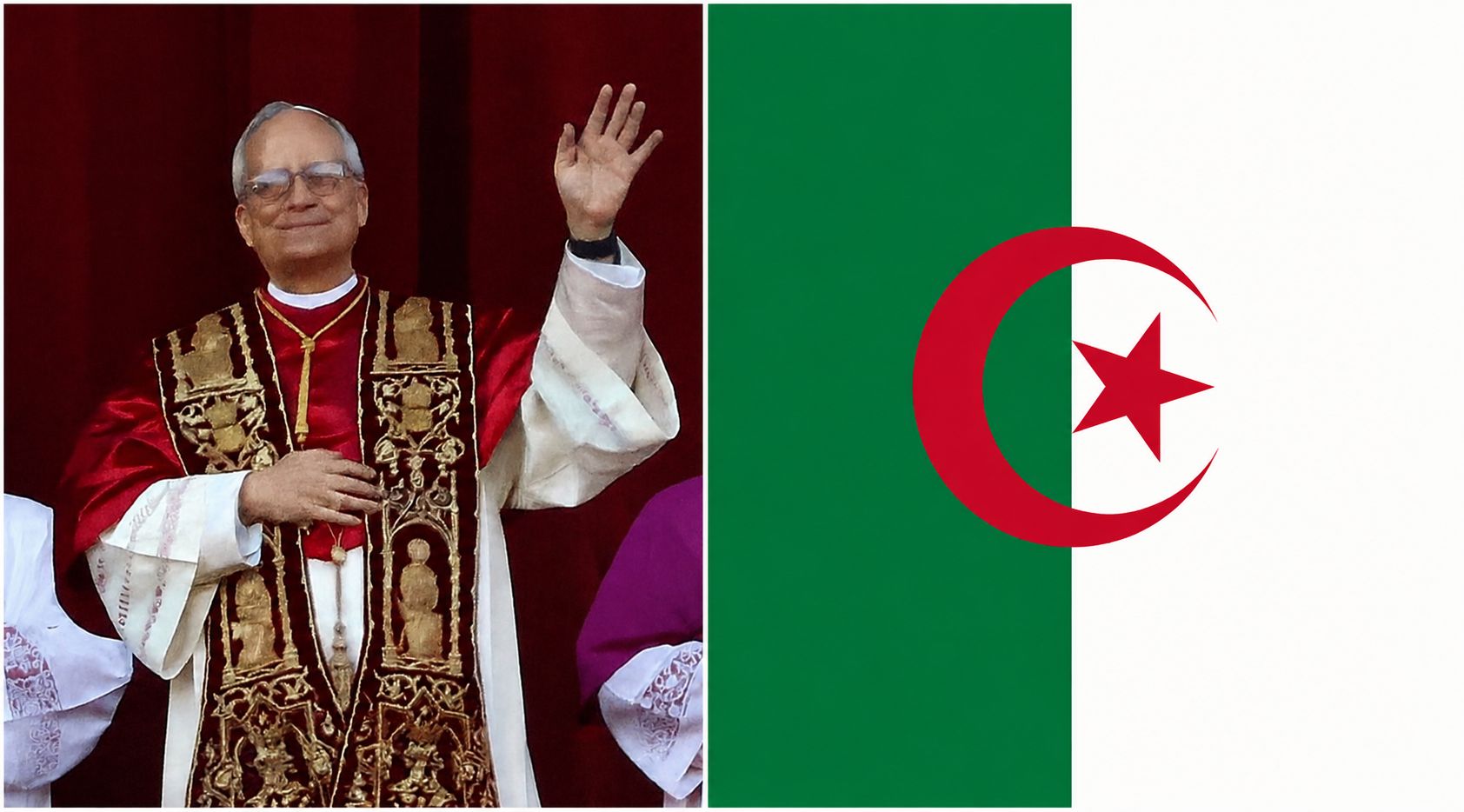
Pope Leo XIV’s mid-April visit to Algeria generated a great amount of international attention, mostly over U.S. President Trump’s (unrelated) spat with the pontiff which erupted then.[1] But it also renewed attention to the situation in Algeria. This first ever papal visit to the overwhelmingly Muslim nation was promoted by the Holy See as part of a wider goodwill effort to advance an interfaith dialogue between Christianity and Islam.[2] For Algeria, which has found itself increasingly isolated on the world stage, Pope Leo’s arrival presented an opportunity to reassert its regional position and world standing. This was particularly timely, as many countries seek new energy and natural gas sources (which Algeria exports) in the wake of the American/Israeli Iranian war. Beyond the visit’s festivities, however, lay unanswered questions concerning Algeria’s relations with the Vatican, and more generally, its collective historical memory, domestic, and foreign policies. These include a thorough examination of the Catholic church’s role during Algeria’s colonial era, along with more contemporary issues concerning religious freedom in Algeria, political repression, and Algeria’s wider international orientation. These topics overshadowed the Pope’s visit and continue to underpin Algeria’s relations with Europe. As much as the Algerian government enjoyed the high-profile visit, it did not motivate the regime to recalibrate its domestic and foreign policy orientations. This raises the question what -if any- type of influence can generate much needed change in Algeria. This article outlines Pope Leo’s historic visit and examines these issues, which cannot be quickly rectified in a two-day papal visit.
Pope Leo has a personal interest in Algeria, unrelated to the country’s present. The Pope is a previous leader of the Augustinian order, based on Saint Augustine’s (354-430) teachings. The 4th century saint was from the ancient town of Hippo, known today as Annaba, in Algeria. Pope Leo has previously visited Algeria twice, preceding his pontificate, focusing on St. Augustine and less on Algeria. Although Algeria usually pays scant interest to its Christian history, St. Augustine is acknowledged there as a “son of the country”, and a symbolic figure. St. Augustine remains a deeply inspiring model for Pope Leo. As such, the trip was presented in the Catholic media as a spiritual homecoming for the Pope.[3] Beyond the personal connection, however, Pope Leo’s decision to make Algeria the first stop of a whirlwind ten-day tour of several African countries stands out. Algeria’s Catholic community numbers only several thousand (out of a population exceeding 45 million), most of whom are foreigners. Algeria’s constitution enshrines Islam as the country’s sole and exclusive religion, leaving little room in the public sphere for other faiths. Few Algerians are familiar with the Roman Catholic church and the Pope’s leadership. Moreover, the memory of long and harsh 132-year French colonial rule, in which Catholic religious leaders serving the European settler community in Algeria (such as Cardinal Charles Lavigerie), evinced a hostile approach towards the Muslim population still hangs heavily. After achieving independence in 1962, Algeria refrained from pursuing close ties with the Vatican, which it associated with the traumatic colonial past. Another difficult event that affected Algeria’s relations with the Holy See was the murder of Catholic monks, nuns and clergy during the “dark decade” of the 1990s, in which Islamist militants and government forces clashed. While Islamist militants claimed responsibility for these killings, questions concerning the Algerian military’s involvement in them remain. Nineteen catholic clergy members were later beatified by Pope Francis in 2018, adding another element to the chilled relations between Algiers and the Vatican.
Against this backdrop, it is not surprising that no pontiff had previously visited Algeria. Pope Leo was undoubtedly aware of this when he announced his trip. His stated interest in promoting interfaith dialogue and openness to engage with Algeria’s past. Algerian president Abdel Majid Tebboune was received by the Pope in the Vatican in July 2025, where he also met with Vatican officials. An official Vatican account of the meetings, noting the good diplomatic relations with Algeria, suggested that the atmosphere between them was improving.[4] Seeking to bolster its international standing, such comments were warmly received in Algiers. Any prior reservations Algeria had about its ties with the Vatican seemed to have been set aside, at least for the moment. That did not, though, indicate a serious Algerian intention to reconsider its historic grievances against the church, or embark on a new diplomatic path. As with many other issues, the Algerian regime’s ideology, still deeply embedded in the country’s struggle for independence, reigns supreme. While much of that ideology is no longer relevant to the country’s contemporary challenges, there is no sign of pending changes or revisions to this narrative. It did seem, however, that the government for the time being modified its approach towards the Holy See.
For the Algerian government, the visit provided a much-needed infusion of positive international attention. Over the past two years, Algeria has faced growing isolation on the world stage, diplomatic setbacks, and tension with key European powers. The United Nations’ Security Council (UNSC) decision in October 2025 to endorse Morocco’s autonomy proposal for the disputed Western Sahara region, in contrast to Algeria’s support for granting independence to the territory, was a disappointing blow to the Algerian government, and a sobering display of its weakened international standing. European support for Morocco’s proposal, which preceded the UNSC vote was an earlier indicator of Algeria’s eroding position.[5] This was further compounded with mounting bilateral friction between Algeria and leading European countries. Over the past two years, Algeria has experienced a great deal of diplomatic tension with France, over a variety of issues, beyond France’s endorsement of Morocco’s Western Sahara proposal. These include the arrest and expulsion of Algerian diplomats in France accused of kidnapping an Algerian dissident, the arrest and indictment in Algeria of figures such as French-Algerian writer Boualem Sansal who previously criticized Algeria and was later released, and mounting accusations against Algeria by French politicians.[6] Algeria has also come under American scrutiny for its relations with Iran,[7] and in many ways has been diplomatically left behind on the world stage.
Under these circumstances, the Algerian government enthusiastically reacted to the Vatican’s announcement of the Pope’s visit. A statement released by the Algerian presidency noted that the planned trip reflected Algeria and the Vatican’s “shared belief in the need to build a world based on peace, dialogue, and justice, against the various challenges currently facing humanity.”[8] Algeria’s media echoed that message, stressing the visit’s historical significance, its symbolical and spiritual dimension in a country where “ancient Christian memory coexists with Muslim reality.”[9]
International human rights groups took issue with that rosy description prior to Pope Leo’s arrival. They argued that daily life in Algeria for non-Muslims was a far cry from peaceful coexistence. The lack of religious diversity in Algeria, whose constitution defines Islam as the state religion, left little room in their opinion for religious pluralism. Critics noted that non-Muslims lacked institutional recognition in Algeria, and that communities such as the small Protestant church and Ahmadi Muslims faced discriminatory legal and administrative restrictions. In practice, the government’s unwillingness to approve non-Muslim religious associations has led to the closure of numerous places of worship.[10]
Beyond the issue of religious freedom, Human Rights groups raised other problems that overshadow public life in Algeria. In the aftermath of the Hirak movement’s anti-government protests in 2019-2021 that demanded deep political change, Algerian authorities cracked down on civic space and peaceful dissent. Arbitrary detentions, prosecutions, and travel bans are common practices. Other forms of repression include restrictions on the media and more generally, freedom of expression. Algerian authorities generally forbid any demonstration or large public gatherings, fearing that they may become anti-government rallies. Criticism was also voiced over the government’s treatment of asylum seekers, refugees, and migrants from sub-Saharan Africa. This included serious human rights violations, inhumane treatment, along with collective and summary expulsions. In a letter to the Pope before his trip, Human Rights organizations described the domestic situation in Algeria and urged him to call on Algerian authorities both in public and in private to respect the rights to freedom of expression, association, and peaceful assembly.[11]
Pope Leo arrived in Algiers on April 13. He was met at the airport by Algerian president Tebboune and other leading officials, undoubtedly thrilled to welcome a high stature persona like the Pope. In his official remarks, president Tebboune highlighted the Pope’s support for the Palestinian cause, once again reflecting Algeria’s longstanding commitment, frequently expressed by its leaders. He did not discuss Algeria’s approach to the Catholic church.[12] Pope Leo paid a highly symbolic visit to Algeria’s national memorial for its War of Independence casualties, where he paid tribute to the fallen and stressed the ongoing need to pursue freedom.[13]That site is of great symbolic importance to Algeria, where the ruling regime continues to base its entire raison d’etre on the War of Independence and the Algerian sacrifices in the anti-colonial struggle. The Pope’s visit there stressed his acknowledgement of those two factors.
While carefully adhering to the visit’s themes of interfaith dialogue and praising the welcome bestowed on him, the Pope did not shy away from expressing pointed criticism of the domestic situation in Algeria. In a speech to Algerian officials, he contended that authorities were “not called to dominate, but to serve their people.”[14] He urged Algerian leaders to foster a vibrant, dynamic, and free civil society. He was confident that “instead of multiplying misunderstandings and conflicts, you can surely become protagonists of a new chapter in history.”[15] Pope Leo stressed the need to “promote critical thinking and freedom, in listening and dialogue, and in the trust that leads us to recognize in those who are different fellow travellers and not threats.”[16] In so doing, the Pope embraced and promoted the messages of human rights organizations, without marring his visit or raising the ire of his hosts.
Indeed, while the Algerian government was less than thrilled to hear the Pope’s statements, officials were determined not to dwell on his remarks and refrained from discussing them. No official comments were made in their wake, and the Algerian media avoided amplifying them. But despite the government’s efforts, Algeria’s precarious reality was never very far beneath the surface. Just hours after his arrival, two suicide bombers blew themselves up at a police station in Blida, 40 kilometers (km) south of Algiers. Several people were injured. There were reportedly no other casualties apart from the perpetrators in the incident, which was reminiscent of Algeria “dark decade” of the 1990s, suggesting that the government was not in full control of the security situation. It was unclear if the attack was connected to the Pope’s visit, but Algerian authorities, clearly embarrassed, imposed a strict news blackout of the event on the country’s media.[17] The Pope’s visit, in any case, proceeded without disruptions. As the Algerian government had hoped, the Pope’s two-day visit ended on a positive note. Any criticism of the situation in Algeria voiced by the pontiff had been contained and did not generate a wider debate about the lack of civil liberties and human rights violations.
Following his departure, en route to Cameroon, the next stop on his African tour, Pope Leo expressed his gratitude to the Algerian civil authorities for their warm welcome and the honour they bestowed on the Holy See. He opined that his visit to Algeria was a wonderful opportunity to continue to build bridges and promote dialogue, suggesting that from his perspective, much had been accomplished, at least symbolically.[18]
The visit’s outcome for Algeria’s population, however, is less clear. After enjoying the attention that accompanied the Holy Father’s visit, Algeria’s political, economic, and social challenges remain intact. The Pope’s calls for a more open society did not leave an impact on the ruling military-backed regime. For the government, business continued as usual. Within the country, the regime still faces brewing public discontent over a dismal economic situation, political repression, and above all, a lack of a compelling and inspiring vision for the country’s future. While its leaders are mostly aging veterans of the anti-colonial struggle, Algeria’s younger generation anxiously awaits a new message that will replace the regime’s ongoing anti-colonial era of lionizing of the War of Independence. Whether constrained by the personal difficulty of letting go of their past, or blinded by unwavering ideological convictions borne out of the war against the West, Algeria’s leaders seem incapable of doing so.
Those difficulties are even more pronounced in Algeria’s diplomatic arena, where it struggles to find its place in a rapidly changing world order. The old anti-colonial positions that underpinned Algerian diplomacy are less relevant and cannot sustain a viable foreign policy. International circumstances may be creating an opening for Algeria. For the last few years, European countries have taken a greater interest in buying natural gas from Algeria, as they seek to reduce their reliance on Russian gas following Russia’s 2022 invasion of Ukraine.[19] A similar development occurred after the outbreak of the American-Israeli war with Iran, amidst growing concerns over the flow of oil products through the Strait of Hormuz. One example of this was Italy’s prime minister visit to Algiers in late March, to discuss expanding its natural gas purchases.[20] Algeria exports natural gas and would like to increase them. Related contacts with foreign parties, however, focus almost entirely on trade, and refrain from substantial topics that could have more of an impact on Algerian society. They have not generated any momentum that might lead Algeria’s government to rethink the foundations of its old diplomatic modus operandi. Given these circumstances, the prospects of significant political change in Algeria are dim and are only marginally influenced by a successful papal visit. Algeria remains very much in limbo and will likely continue to be if the current leadership maintains its positions.
Daniel Zisenwine is a Researcher at the Moshe Dayan Center (MDC) for Middle Eastern and African Studies, Tel Aviv University.
*The opinions expressed in MDC publications are the authors’ alone.
[1] Matthew Mpoke Bigg, “With Algeria Visit, Pope Leo Returns to his Roots in a Holy Order,” The New York Times, April 14,.2026, https://www.nytimes.com/2026/04/14/world/africa/pope-leo-algeria-africa-visit.html
[2] “Pope Leo XIV to Make Apostolic Journeys to Africa, Spain, and Monaco," Vatican News, February 25, 2026, https://www.vaticannews.va/en/pope/news/2026-02/pope-leo-to-visit-africa-spain-and-monaco.html; Jean-Charles Putzolu, “Cardinal Vesco: Pope’s Algeria Visit ‘beautiful sign of Openness’,” Vatican News February 27, 2026, https://www.vaticannews.va/en/church/news/2026-02/cardinal-jean-paul-vesco-pope-journey-algeria-st-augustine.html; Salvatore Cernuzio, “Europe and Africa React to Announcement of Papal Journey,” Vatican News, February 25, 2026, https://www.vaticannews.va/en/pope/news/2026-02/pope-leo-journey-cameroon-algeria-monaco-spain-angola.html
[3] “Pope Leo XIV’s Historic Algeria Pilgrimage: A Son of Augustine Calls for Humility and Peace,” Augustinians: Order of Saint Agustine, April 16, 2026, https://www.augustinianorder.org/post/pope-leo-xiv-s-historic-algeria-pilgrimage-a-son-of-augustine-calls-for-humility-and-peace; Brendan Towell, What the World Missed When the Pope Returned to St. Augustine’s Homeland,” National Catholic Register, April 20, .2026, https://www.ncregister.com/commentaries/towell-pope-leo-augustine-algeria; Matthew Mpoke Bigg, “With Algeria Visit, Pope Leo Returns to his Roots in a Holy Order,” The New York Times, April 14, 2026, https://www.nytimes.com/2026/04/14/world/africa/pope-leo-algeria-africa-visit.html
[4] Deborah Castellano Lubov, “Pope Leo XIV Receives the President of the Republic of Algeria,” Vatican News, July 24,.2025, https://www.vaticannews.va/en/pope/news/2025-07/pope-leo-xiv-receives-president-of-algeria-vatican.html
[5] “Algeria Distances itself from New UNSC Resolution on Western Sahara, Citing Departure from UN Decolonization Principle,” Sahara Press Service, October 31, .2025 https://www.spsrasd.info/en/2025/11/01/12649.html
[6] Brahim Oumansour, “Franco-Algerian Relations: Behind the De-Escalation of Tensions, What are the Stakes?” Institut de relations internationales et strategiques, https://www.iris-france.org/en/franco-algerian-relations-behind-the-de-escalation-of-tensions-what-are-the-stakes/; “Why are Relations between France and Algeria so Bad”, Al-Jazeera,”May 1, 2025 https://www.aljazeera.com/news/2025/5/1/why-is-algeria-unhappy-with-france; Karim Merzan,n France and Algeria Get their Relationship Back on Track?,” Atlantic Council, March 31, 2026, https://www.atlanticcouncil.org/blogs/menasource/can-france-and-algeria-get-their-relationship-back-on-track/
[7] Frederic Powelton, ”United States and Israel: Warning Issued to Algeria and Iran,” Sahel-Intelligence, April 10, 2026, https://sahel-intelligence.com/42620-united-states-and-israel-warning-issued-to-algeriaand-iran.html#:~:text=10%20avril%202026%20Fr%C3%A9d%C3%A9ric%20Powelton,could%20lead%20to%20significant%20consequences
[8] “Leo to Become First Pope to Visit Muslim Algeria,” New Arab, April 11,2026, https://www.newarab.com/news/leo-become-first-pope-visit-muslim-algeria
[9] “Leo to Become First Pope to Visit Muslim Algeria,” New Arab, April 11, .2026, https://www.newarab.com/news/leo-become-first-pope-visit-muslim-algeria
[10] “Chretiens en algerie”, European Centre for Law and Justice, https://eclj.org/religious-freedom/french-institutions/visite-du-pape-en-algerie-un-nouveau-rapport-revele-loppression-subie-par-les-chretiens-?lng=en; Euromed Rights, Human Rights Watch, MENA Rights Group, “Pope Leo XIV Should Raise Human Rights Issues during his Visit to Algeria,” Joint Letter, April 7, 2026, https://www.hrw.org/news/2026/04/07/pope-leo-xiv-should-raise-human-rights-issues-during-his-visit-to-algeria
[11] Euromed Rights, Human Rights Watch, MENA Rights Group, “Pope Leo XIV Should Raise Human Rights Issues during his Visit to Algeria,” Joint Letter, April 7, 2026, https://www.hrw.org/news/2026/04/07/pope-leo-xiv-should-raise-human-rights-issues-during-his-visit-to-algeria
[12] “Algerian President, Pope Leo XIV Call for Justice for Palestinians,” Memo, Middle East Monitor, April 14 2026, https://www.middleeastmonitor.com/20260414-algerian-president-pope-leo-xiv-call-for-justice-for-palestinians/
[13] Caludia Torres, “Day One in Algeria: Pope Leo a Missionary of Peace,” Vatican News, April 13,2026, https://www.vaticannews.va/en/pope/news/2026-04/day-one-algeria-missionary-peace.html
[14] “In Algeria, Pope Calls on Authorities ‘Not to Dominate, but Serve the People,” Middle East Eye, April 14,2026, https://www.middleeasteye.net/news/algeria-pope-calls-authorities-not-dominate-serve-people
[15] Devin Watkins, “Pope in Algeria: Deserts and Seas Must Be Oases of Peace, Mutual Enrichment,” Vatican News, April 13, 2026, https://www.vaticannews.va/en/pope/news/2026-04/pope-leo-xiv-algeria-civil-authorities-peace-hope.html; “Pope Leo in Algeria: Let us Multiply the Oases of Peace,” Exaudi News, April 13,2026, https://exaudi.org/pope-leo-xiv-in-algeria-let-us-multiply-the-oases-of-peace/
[16] “Pope Visits Algeria, with Calls for a ‘Dynamic, Free’ Civil Society," Radio France Internationale, April 14, 2026, https://www.rfi.fr/en/international/20260414-pope-visits-algeria-with-calls-for-a-dynamic-free-civil-society
[17] Sarah Bellouezzane, “Pope’s First Day in Algeria Marred by Failed Suicide Attack near Algiers,” Le Monde, April 14, 2026, https://www.lemonde.fr/en/le-monde-africa/article/2026/04/14/pope-s-first-day-in-algeria-marred-by-failed-suicide-attack-near-algiers_6752401_124.html; “Suicide Bombings in Algeria: What We Know so Far,” Hespress English, April 14, 2026, https://en.hespress.com/135746-suicide-bombings-in-algerias-blida-what-we-know-so-far.html
[18] Devin Watkins, “Pope: Algeria Visit a ‘Special Blessing’ and Opportunity to Promote Dialogue”, Vatican News, April 15, 2026, https://www.vaticannews.va/en/pope/news/2026-04/pope-leo-xiv-reflects-visit-algeria-augustine-dialogue.html
[19] Frances Ghiles, “A Tale of Two Gas Suppliers to Europe: Algeria and Libya,” CIDOB Notes Internacionals 331, January 2026, Barcelona Center for International Affairs, https://www.euronews.com/my-europe/2026/03/25/italys-pm-meloni-plans-closer-cooperation-with-algeria-to-boost-gas-deliveries
[20] Giorgia Orlandi and Gavin Blackburn, “Italy’s PM Plans Closer Cooperation with Algeria to Boost Gas Deliveries,” EuroNews, March 25, 2026, https://www.euronews.com/my-europe/2026/03/25/italys-pm-meloni-plans-closer-cooperation-with-algeria-to-boost-gas-deliveries