



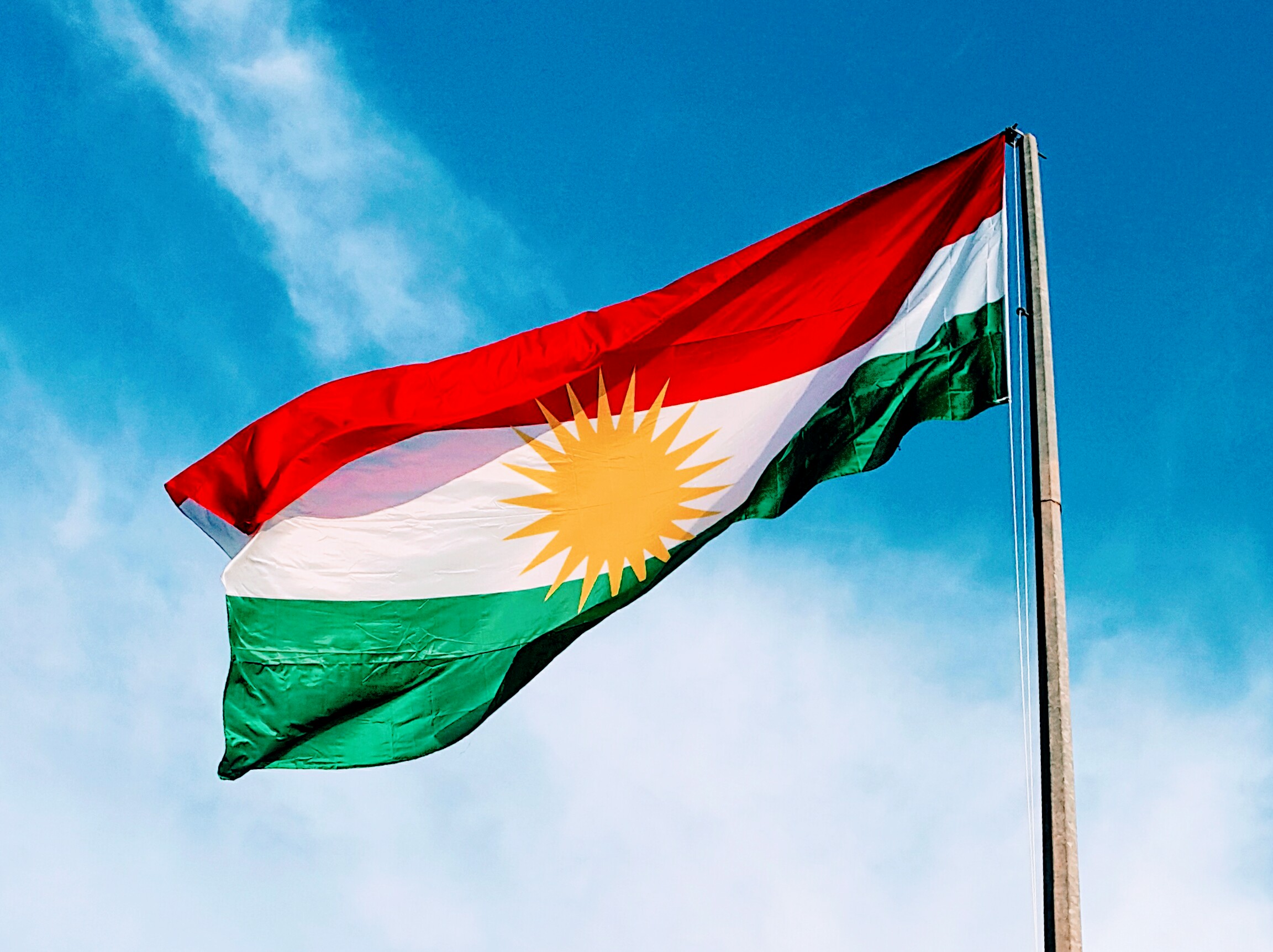
Sarchia Khursheed, via wikimedia commons [CC BY-SA 4.0]. , via Wikimedia Commons

The sea-changes that have occurred in the Middle East following the October 7 War in 2023 and its aftermath have left their impact on all non-state players as well, including the Alawis, the Druze, and the Kurds. The Kurds, the largest of these groups, account for some 40 million people, are divided between four countries: Turkey, Iran, Iraq, and Syria. They have played an important and often underappreciated role in both domestic, regional, and international affairs. For example, it was recently reported that Iraqi Kurdistan President Nechirvan Barzani was asked by the Trump administration to serve as a secret backchannel between Washington and the Islamic Revolutionary Guard Corps (IRGC) leader, General Ahmad Vahidi in May 2026.
This article examines Kurdish political challenges since 2023, with a focus on the role Kurdish leaders have played in the successes and failures of the Kurdish national movement. It asks whether the negative influence of external actors can be transformed into a positive one, and if so, how? Finally, it identifies what lessons the Kurds might take away from their recent experiences.
Historical Patterns
Since the First World War, a number of recurring historical patterns have shaped the fate of the Kurds and Kurdistan and continue to influence Kurdish politics today. The central question, therefore, is whether the Kurds can break this vicious cycle, and if so, how.
These recurring patterns include the following:
The Kurds have participated in almost every major conflict in the Middle East, yet they have consistently paid a heavy price for their involvement.
Despite frequent rivalry—and at times outright hostility—among the regional states, their governments have repeatedly united whenever the Kurds appeared on the verge of achieving significant political gains.
Western powers, particularly Great Britain and the United States, have long adhered to the principle of preserving the territorial integrity of existing states, often at the expense of Kurdish national aspirations.
Although the Kurds have been divided among four states (Turkey, Iran, Iraq, Syria), developments in one part of Kurdistan have consistently had significant repercussions in the others. Nevertheless, their greatest weakness has remained their persistent lack of unity.
Although the Kurds repeatedly demonstrated considerable military capability on the battlefield, playing a crucial role, for example, in the war against ISIS between 2014 and 2019, they have been largely absent from the negotiating table once the fighting ended. Consequently, post-war settlements have generally worked to their disadvantage. Three emblematic examples of this diplomatic exclusion are the Treaty of Lausanne (1923), the Soviet-Iranian Agreement (1946), and the Algiers Agreement (1975).
The Second Gulf War in Iraq (2003) and the Syrian civil war, which began in 2011, modified some of these long-standing patterns. For the first time in modern history, these conflicts culminated in the establishment of an autonomous Kurdish region in Iraq and a quasi-autonomous Kurdish administration in Syria. Moreover, these developments occurred with the approval—and, in important respects, the active support—of the United States.
As a result, during the second decade of the twenty-first century, the Kurds succeeded in elevating their status from that of a marginalized people to a central political actor in the Middle East. Several factors contributed to this transformation: the political upheavals unleashed by the 2010-2011 Arab uprisings, the rise of ISIS, and the near collapse of the state system in both Iraq and Syria. Together, these developments created an unprecedented opportunity for the Kurds to demonstrate their military effectiveness, their reliability as partners of the West, and the comparatively secular character of their political movements. Reluctant to deploy large numbers of troops on the ground, the United States and its allies found in the Kurdish forces of Iraq and Syria capable and dependable partners in the campaign against ISIS.
How enduring, however, were these achievements? More importantly, what is the situation following the most recent upheavals in the region? Although the Kurdish experience has varied across different parts of Kurdistan, many of these gains have eroded, and in some regions the Kurds have suffered grave challenges erasing hard-fought gains, effectively returning them to square one.
The Kurdish Setback
Several developments accelerated the deterioration of the Kurdish position. Some resulted from the policies of external actors, while others stemmed from shortcomings within the Kurdish movement itself. At the same time, the regional balance of power underwent profound changes, with significant adverse consequences for the Kurds.
Four principal actors contributed to this setback: Turkey as its architect; the United States as its principal catalyst; the new authorities in Syria, together with Iran, as its executors; and the Kurdish leaderships as its enabler.
The principal architect of the Kurdish setback has been Turkey under President Recep Tayyip Erdoğan. Ankara has pursued an active policy across all parts of Kurdistan with the objective of preventing the emergence of any form of Kurdish self-determination. The foundations of this strategy were laid in 2016, when Turkey simultaneously expanded its military operations in Rojava and intensified its support for Ahmad al-Shara (formerly Abu Mohammad al-Jolani) and Hay'at Tahrir al-Sham (HTS), a policy that ultimately culminated in the overthrow of Bashar al-Assad's regime at the end of 2024.[1]
In Bashur (Iraqi Kurdistan), Turkey played a central role in mobilizing regional opposition to the Kurdish independence referendum of 2017. At the same time, it established over 136 military bases and outposts throughout the region.[2] Officially, these deployments were intended to combat the PKK in the Qandil Mountains. In practice, however, they also served Turkey's broader expansionist objectives in Iraqi Kurdistan.
In Rojhalat (Iranian Kurdistan), Erdoğan also played an important role in thwarting the reported Israeli-American plan to encourage a Kurdish insurgency during the American-Israeli campaign against Iran in February–March 2026. According to the plan, the Mossad and the CIA armed five Iranian Kurdish clandestine parties as part of a campaign to facilitate regime change in Iran. However, according to the Iranian Foreign Minister, Abbas Araghchi, Turkey played an “effective” role in convincing Trump to nip it in the bud.[3]
Turkey's most ambitious strategy, however, focused on Bakur (Turkish Kurdistan), with its principal objective the dismantling of the PKK. Beginning in 2015, Erdoğan pursued a comprehensive strategy that combined military operations, administrative measures, and a range of coercive policies designed to weaken and ultimately neutralize the organization's leadership. By May 2025, the PKK leadership had become so weakened that it decided to dissolve the organization unilaterally and without preconditions.[4] Thus, the decades-long conflict with the PKK effectively came to an end without the Turkish government having to fire a single shot.[5]
As on previous occasions, developments in Turkey had immediate repercussions for the Kurds in Syria. There, too, the Kurdish leadership—which took its direction from Abdullah Öcalan—was excluded from the negotiations. Its capitulation followed with remarkable speed.
Turkey's strategy was further reinforced by several concurrent developments: the collapse of the Ba'ath regime in Syria at the end of 2024, the rise to power of Ahmad al-Sharaa in January 2025, and the inauguration of President Donald Trump for a second term at approximately the same time.
Al-Sharaa, whose political success owed much to Turkish support, became the principal instrument for dismantling the Kurdish quasi-autonomous administration in northeastern Syria. This objective was achieved rapidly in January 2026 for several reasons: the negative precedent set by the PKK's dissolution in Turkey, the fear of direct Turkish military intervention, and the abandonment of the US.
The practice of American abandonment had already become apparent during the first Trump administration (2017–2020). On two major occasions, President Trump demonstrated indifference verging on hostility to the Kurdish cause. The first came in September 2017, when his administration opposed the Kurdish independence referendum and turned blind eye to the Kurdistan Regional Government's encirclement from Turkey, Iran, and Iraq. The second occurred in October 2019, when he decided to withdraw American forces from Rojava, effectively giving Turkey a green light to invade the region.[6]
The second Trump administration reproduced this practice on a much broader scale. President Trump and his Special Envoy for Syria and Ambassador to Turkey, Tom Barrack, advanced a narrative that largely erased the Kurds' decisive contribution to the defeat of ISIS in both Iraq and Syria.[7] More significantly, driven by a shared vision of a unitary Syrian state, Trump, Barrack, and Erdoğan acted in concert to suffocate the Kurdish quasi-autonomy in Syria. At the same time, the United States offered little meaningful support to the Kurdistan Regional Government in its continuing disputes with Baghdad, whose policies have increasingly sought to weaken—and ultimately dismantle—the fragile federal arrangements established in post-2003 Iraq.
Within the Kurdish camp, another historical pattern re-emerged during the latest regional upheavals: Kurdish representatives were once again marginalized at the negotiating table when the future of their people was being decided.
This recurring diplomatic marginalization may be attributed to several factors, including limited diplomatic experience, weak intelligence capabilities, and insufficient access to decision-making circles in Washington and other Western capitals. By contrast, regional states such as Turkey and Iraq have repeatedly used their diplomatic influence to obstruct Kurdish aspirations for self-determination. The Kurdish movement, still relatively inexperienced in this arena, was unable to counter these coordinated efforts.
Closely related to this problem was the Kurdish approach to its partnership with the West in the campaign against ISIS. Although Kurdish forces played a crucial role in the defeat of the organization in both Iraq and Syria, they received little political reward for their efforts and moreover, ended up being punished after all. One reason was that Kurdish leaders failed to put clear political conditions either before or after the conflict.
A similar strategic miscalculation was the PKK's decision to dissolve itself before entering negotiations with the Turkish government. This decision caused havoc not only for the Kurds in Turkey but also for those in Syria, while also indirectly weakening the position of the Kurdistan Regional Government in Iraq.[8]
The frequent redefinition of Kurdish national objectives has also contributed to their setback. The Kurdistan Democratic Party (KDP), for example, revised its declared goal from autonomy to federalism and ultimately to independence. The PKK, by contrast, moved from advocating independence to promoting democratic autonomy and, more recently, to emphasizing cultural and linguistic rights.
Such repeated shifts in political objectives have caused bewilderment among the Kurdish public and have hindered the consolidation of a coherent national identity as well as a consistent strategy for achieving national rights. Moreover, this lack of strategic consistency has weakened the Kurdish movement's political position and reduced its bargaining power vis-à-vis the central governments.
It is often said that mistakes are an inevitable part of politics. The more important question, however, is whether Kurdish leaders have drawn meaningful lessons from past failures and sought to correct them? Judging by the Kurdish position following the latest upheavals in the region, the answer appears to be negative.
The changing dynamics in the region have adversely affected every part of Kurdistan. In Bakur (in Turkey), the old leadership has become politically exhausted, yet no new generation of leaders has emerged to fill the resulting vacuum.[9] In Rojava (in Syria), the leadership failed to develop a viable contingency plan, and the autonomous political structures it had built rapidly disintegrated. Bashur (in Iraq)—the crown jewel of Kurdish self-government—faces two serious challenges. The first, is the failure to form a cabinet more than two years after the October 2024 elections due to the conflict between the two large parties: the Kurdistan Democratic Party (KDP) and the Patriotic Union of Kurdistan (PUK).[10] The second, is the increasingly unfavorable balance of power vis-à-vis Baghdad. Together, these developments threaten the long-term viability of the Kurdistan Region. The Kurds of Rojhalat (in Iran) have also suffered from the recent conflict, as has the wider Iranian population. However, it was fortunate for them that their leadership was stopped in the last moment from engaging in the war.
Cautious Optimism
Despite this bleak assessment, several developments offer grounds for cautious optimism and may help improve the Kurdish position in the future. For one thing, Kurdish national consciousness remains remarkably strong. This enduring sense of collective identity could serve as an important source of pressure on Kurdish political leaders to improve their performance and pursue more effective national strategies. For another, the Kurdish diaspora—whose ranks increasingly include academics, professionals, policymakers, and political activists—has the potential to play a far more significant role in bringing Kurdish perspectives to decision-making circles in the West and in strengthening Kurdish diplomatic influence.
After the recent setbacks, Kurdish policymakers are seeking to cultivate partnerships with regional states that are increasingly concerned about Turkey's expanding influence in the Middle East. Such partnerships could help offset the growing regional imbalance of power. Similarly, with the dismantling of the PKK, the KDP's main rival, the latter is moving to fill the vacuum by spreading its own influence in the Kurdistan arena beyond the Iraqi region. If it succeeds in its endeavor the chronic rivalry within the Kurdish camp might be reduced significantly.
As for the long-standing aspiration for Kurdish independence, its realization will ultimately depend not only on favorable regional and international circumstances but also on the emergence of a new generation of leadership. It will be incumbent upon new leadership to demonstrate four complementary qualities: the vision to articulate a national project, the capacity to build durable institutions, the diplomatic skill to cultivate international support, and the financial expertise necessary to sustain long-term state-building efforts. For the time being no such leadership has emerged, but politics is dynamic and sometimes provides its own surprises.
Ofra Bengio is a Senior Research Fellow and Professor (Emeritus) at the Moshe Dayan Center (MDC) for Middle Eastern and African Studies, Tel Aviv University. Professor Bengio is also the founder of the MDC’s Kurdish Studies Program.
*The opinions expressed in MDC publications are the authors’ alone.
[1] Sinan Ciddi, “Erdogan's long game in Syria,” The Jerusalem Strategic Tribune, August 2025.
[2] “Turkey expands permanent military bases in Kurdistan region to 136, an 89% increase since 2018,” The National Context, May 1, 2025.
[3] Seth Frantzman, “Iranian Kurdish groups unite against Tehran regime, Iraqi militias threaten Kurdistan region,” Long War Journal, February 27, 2026; Amberin Zaman, “Iran's Araghchi reveals Turkey's role in thwarting Kurdish offensive,” Al-Monitor, July 20, 2026.
[4] During the PKK's 12th congress held in the KRG on May 5-7 the 232 delegates voted to terminate all activities of the group. The group stated that it had completed its historical mission and that Kurdish issue may be resolvable through democratic politics rather than armed conflict. “Final declaration of the PKK’s 12th congress”, Pa-x Analytics, The University of Edinburgh, May 12, 2025.
[5] For the dramatic move, see Michael Gunter, “The torturous Turkey-PKK process,” Middle East Policy, 33 (3), May 2026.
[6] President of the American Council on Foreign relations, Richard Haass, stated the following regarding the withdrawal: “the abandonment of Kurdish forces in northern Syria has reinforced already existing doubts in the region and around the world that the United States remains a reliable ally.” Richard Hass, “The High Price of Trump’s Great Betrayal,” Project Syndicate, October 17, 2019.
[7] Winthrop Rodgers, “For Kurds, Tom Barrack becomes the latest face of US betrayal,” Inkstick, March 3, 2026.
[8] For an opposing view, see Gülistan Gürbey, “Ocalan's call for the dissolution of the PKK and the regional context,” Turkeyscope, The Moshe Dayan Center (MDC), April 9, 2025.
[9] In August 2026 Turkey's parliament passed a law establishing a legal framework for the disbandment of the PKK. However, the law did not address Kurdish demands for political and cultural rights. Ece Toksabay, “Turkish parliament passes landmark law to advance PKK peace process,” Al-Monitor, August 10, 2026.
[10] “KRG cabinet formation deadlock passes 653 days, longer than Brussels or Belfast,” The National Context, August 4, 2026. This deadlock has serious impact on all political and administrative institutions such as the parliament and the judiciary.