



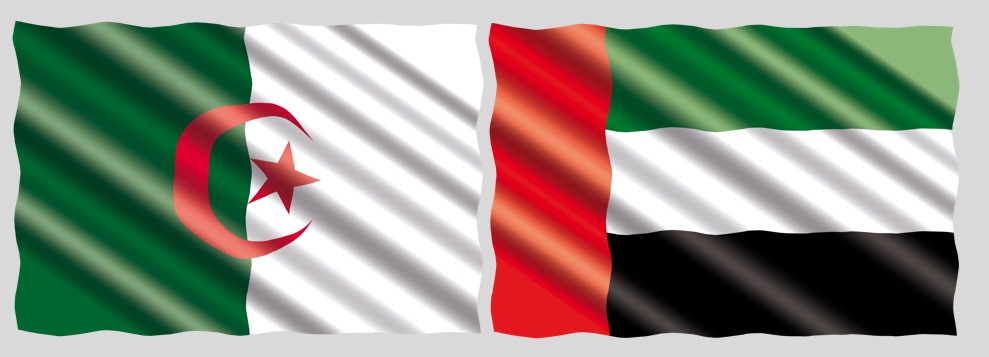
While events concerning the United Arab Emirates (U.A.E.) and the Persian Gulf region continue to attract much international interest, one recent development has received less attention. Last month Algeria severed diplomatic relations with the Emirates, exposing months of behind-the-scenes tensions.[1] The Algerian decision combines several elements, ranging from its displeasure over the U.A.E.’s support of the Moroccan position in the Western Sahara dispute, to more vocal Algerian objections to growing Emirati involvement in the Sahel region. Such activity is viewed by Algeria as a threat to its regional standing and damaging to its relations with major powers such as France and Russia. Notwithstanding these concerns, Algeria’s decision to break diplomatic relations is severe and unusual. While the U.A.E expressed regret over the Algerian move, it hasn’t made significant efforts to reduce tensions, demonstrating its confident diplomatic posture. This article outlines the current situation and its background and assesses the prospects for ending the crisis. Beyond highlighting the inner workings of Algerian diplomacy and the Emirati reactions to Algeria’s steps, the unfolding crisis is another indicator of the different diplomatic approaches in each country. The U.A.E. continues to promote an embracing, inclusive stance as a primary element of its foreign policy, while Algeria remains stubbornly committed to old, and often outdated, ideological commitments that highlight national sovereignty to guide its foreign affairs. These two visions are now starkly on display and raise questions about the nature of foreign relations across the entire Middle East and North Africa (MENA) region, exceeding the immediate Algerian-Emirati framework.
On September 10, without prior warning, Algeria announced it was severing ties with the U.A.E. The Algerian statement did not offer a specific reason for the move, other than alluding to a series of “provocative or hostile actions” allegedly carried out by the Emirates. [2] Algeria’s foreign ministry contended that these actions has reached a point where they could no longer be acceptable or tolerable, and asserted that all means to preserve bilateral relations had been exhausted. The Emirati ambassador to Algiers, who had been summoned to the foreign ministry, was informed that he had 48 hours to leave the country. The Algerian defence ministry followed by announcing that Algeria will close its airspace to all UAE-registered civilian and military aircraft. Commercial U.A.E. flights to and from Algiers will be exempt from the ban until the expiration of the current contract at the end of 2026.[3]
This short time frame further underscored Algeria’s displeasure with the U.A.E. and its intention to send a clear message to the Emiratis. The U.A.E. issued a cautious response to the Algerian decision, expressing hope that this would be a temporary measure, adding that Abu Dhabi remained committed to preserving ties between the two countries. The statement, however, did not address any specific issues that may have soured bilateral ties, and did not convey a sense of urgency among Emirati officials to address the crisis. This sentiment was also evident in the words of Anwar Gargash, diplomatic adviser to the U.A.E. president, who said on X that diplomatic relations should be based on "rationality, communication and clarity of interests", rather than "riddles and signals that require decoding".[4] This comment did not directly mention Algeria but was certainly familiar to anyone following Algerian politics and government, which is often portrayed as confusing and opaque. Gargash added that successful diplomacy depended on clear positions and the effective management of interests and disagreements but refrained from elaborating on necessary measures to end the crisis.[5]
The September 10 announcement was unexpected but was not the first indication of growing friction between the two countries. Algeria’s president, Abd al-Majid Tebboune, has strongly criticized the Emirates over the past year for intervening in regional affairs, and working to destabilize countries in north and sub-Saharan Africa, including Libya, Mali, and Sudan. Tebboune has often belittled the U.A.E. in speeches as a "micro-state" or "statelet" seeking to destabilize several countries in the region. "Wherever they set foot, blood flows," he said in a televised interview in July, adding that the U.A.E. has had a "very negative impact."[6] At the time, Tebboune said a diplomatic break "would have happened long ago" had Algeria not sought to avoid "deepening divisions" in the Arab world. Last February, Algeria began cancelling its air-services agreement with the UAE, signaling the worsening bilateral relationship.[7] Back in January 2024, Algeria’s High Security Council discussed developments in neighboring countries and the Sahel and denounced hostile acts by an unnamed “brotherly Arab country.” The U.A.E. was not directly named, but the statement indicated that the dispute with the Emirates had entered Algeria’s highest national-security institution. Algeria’s rhetoric against the U.A.E. intensified after that, reaching the point where a day before the September 10 announcement, the country’s Algeria Press Service described the U.A.E. as the “conductor” behind regional crises and conflicts, citing its financial support for influential local actors and networks across Africa and the Middle East.[8] Still, there were few signs of a threat to diplomatic relations.
A closer look at the roots of the current crisis reveals several key arenas that generated Algeria’s decision. These include regional developments, inter-Arab issues, and domestic Algerian concerns. Many observers agree that the regional factor plays an important role in understanding Algeria’s ire with the U.A.E. Algeria’s leaders are wary of they perceive as growing Emirati involvement in regional affairs. They contend that the U.A.E. has supported secessionist groups in Libya (such as Khalifa Hafter’s troops) and Sudan.[9] Algeria views these forces as a strategic threat to its long-term stability and ideologically opposes efforts to undermine any nation-state’s hard-won sovereignty, a position that harks back to its long and violent struggle for independence from France, which ended in 1962. Algeria has also expressed greater sensitivity to the unfolding situation in the Sahel and offered unprecedented military assistance to Niger’s ruling military against a coup attempt in August. The Sahel region is considered part of Algeria’s strategic depth, with its long border with Algeria, and the threat of instability there spilling over the border. Algeria views the increasing involvement of foreign powers there with dismay and consternation.[10] Although there was no evidence of Emirati involvement in the August coup attempt, Algerian leaders assumed the worst given their heightened suspicions against the U.A.E. The Algerians have viewed the U.A.E. aid to Mali over recent years as another indication the Emiratis’ growing footprint in the region. On a broader international level, after being rejected from the BRICS membership in the summer 2023 again presented unsubstantiated claims that the U.A.E. was influential in derailing the Algerian request.[11] The BRICS rejection, attributed to Algeria’s state-dominated economy, inefficient banking system, its heavy dependence on oil and gas incomes, and poor investment climate was a stinging rebuke to Algeria. As a veteran Cold War “non-aligned state,” an economic bloc like BRICS is precisely the type of international framework Algeria would like to join and sees itself as a natural member. The BRICS rejection exacerbated Algeria’s sense of widening global isolation.[12]
The inter-Arab influences on Algeria’s foreign policy are clearer. Algeria views the U.A.E., which supports its regional rival Morocco, as a negative influence. The Emiratis support Morocco’s position regarding the Western Sahara region and established a consulate in the region’s town of Laayoune in 2020. Beyond the Western Sahara is the question of relations with Israel. Algeria’s strongly opposes normalization with the Jewish state and has accordingly voiced vehement criticism to the Abraham accords and the U.A.E.’s leading position in them. The prospect of an emerging alliance between the Emirates, Israel, and Morocco that would be right on Algeria’s doorstep is deeply worrisome to Algerian leaders.[13]
There are also (unproven) Algerian allegations of Emirati interference in domestic affairs, such as the claim that Algeria backed a rival candidate to president Tebboune in the 2020 presidential elections. Algeria has also asserted that the Emiratis offered support to secessionist Amazigh aspirations in the Kabylie region, once again undermining Algerian sovereignty.[14] While there is scant evidence, if at all, to prove these and other arguments, they present a new way for the Algerian regime to justify many of the economic and diplomatic setbacks the country has experienced over the past few years: blaming a foreign country as the root of its ills. This is not to conclude that the Emiratis are being unfairly accused of playing a greater role across the Maghreb and the Sahel. The U.A.E.’s activities may not extend beyond typical foreign policy measures. Without disclosed documents concerning these matters, it is difficult to determine how much the Emirates are indeed involved in those regions. The U.A.E, for its part, has not directly responded to the Algerian accusations, leaving much of the narrative underpinning the crisis on the Algerian side.
Notwithstanding the veracity of Algeria’s allegations, the rupture with the U.A.E exposes a stark contrast between each country’s approach to foreign relations, and their current international standing. The U.A.E. projects more confident, flexible, and inclusive positions in its foreign policies, which garners a great deal of international appreciation. Algeria, however, appears increasingly confused, fearful, and unprepared for a rapidly changing world order. This is unfortunately an ongoing challenge for Algeria. Its difficulties in reacting to new developments is another item on Algeria’s growing need to alter many of its longstanding positions, not only in its domestic affairs but also in fine tuning its foreign relations. In that sense, many Algerians want their country to move forward, and this latest diplomatic squabble just adds to the frustration many Algerians harbor towards their government’s policies. Given the Algerian regime’s unwillingness to discard historic principles it views as vital to its legitimacy, and embrace new positions, prospects for significant change in Algeria’s domestic and foreign policies remain elusive.
Daniel Zisenwine is a Researcher at the Moshe Dayan Center (MDC) for Middle Eastern and African Studies, Tel Aviv University.
*The opinions expressed in MDC publications are the authors’ alone.
[1] Karim Merzan, “What’s Behind the Algerian-UAE Rupture?,” MENA Source, Atlantic Council, September 28,2026.
[2] Hafsa Kahlil, “Algeria to Sever Diplomatic Ties with the UAE,” BBC News, September 10, 2026.
[3] Jana Choukeir, “Algeria Cuts Diplomatic Ties with UAE,” Reuters, September 10, 2026.
[4] Jana Choukeir, “Algeria Cuts Diplomatic Ties with UAE,” Reuters, September 10,2026.
[5] Jana Choukeir, “Algeria Cuts Diplomatic Ties with UAE,” Reuters, September 10, 2026.
[6] “Algeria Cuts Diplomatic Ties with UAE over ‘Provocative and Hostile Actions,” France24, September 10, 2026.
[7] “Algeria Cuts Diplomatic Ties with UAE over ‘Provocative and Hostile Actions,” France24, September 10, 2026.
[8] Amel Boubekeur, “Analysis: How Algeria Came to Treat the UAE as a National Security Threat,” Middle East Eye, September 14, 2026.
[9] Karim Merzan, “What’s Behind the Algerian-UAE Rupture?,” MENA Source, Atlantic Council, September 28, 2026.
[10] Zahra Rahmouni, “Sahel instability pushes Algeria to rethink its long-standing non‑intervention doctrine,” Middle East Eye, September 18, 2026.
11 Amel Boubekeur, “Analysis: How Algeria Came to Treat the UAE as a National Security Threat,” Middle East Eye, September 14, 2026.
[12] Yahia H. Zoubir, Xuanrong Wu, “Algeria at the BRICS’ Doorstep: A Journey of Aspirations and Opportunities,” Middle East Council on Global Affairs, December 17, 2023; “Algeria : BRICS membership rejected,” Africa News Agency, July 14, 2023.
13 Karim Merzan, “What’s Behind the Algerian-UAE Rupture?,” MENA Source, Atlantic Council, September 28, 2026; Amel Boubekeur, “Analysis: How Algeria Came to Treat the UAE as a National Security Threat,” Middle East Eye, September 14, 2026.
[14] Karim Merzan, “What’s Behind the Algerian-UAE Rupture?,” MENA Source, Atlantic Council, September 28, 2026.