



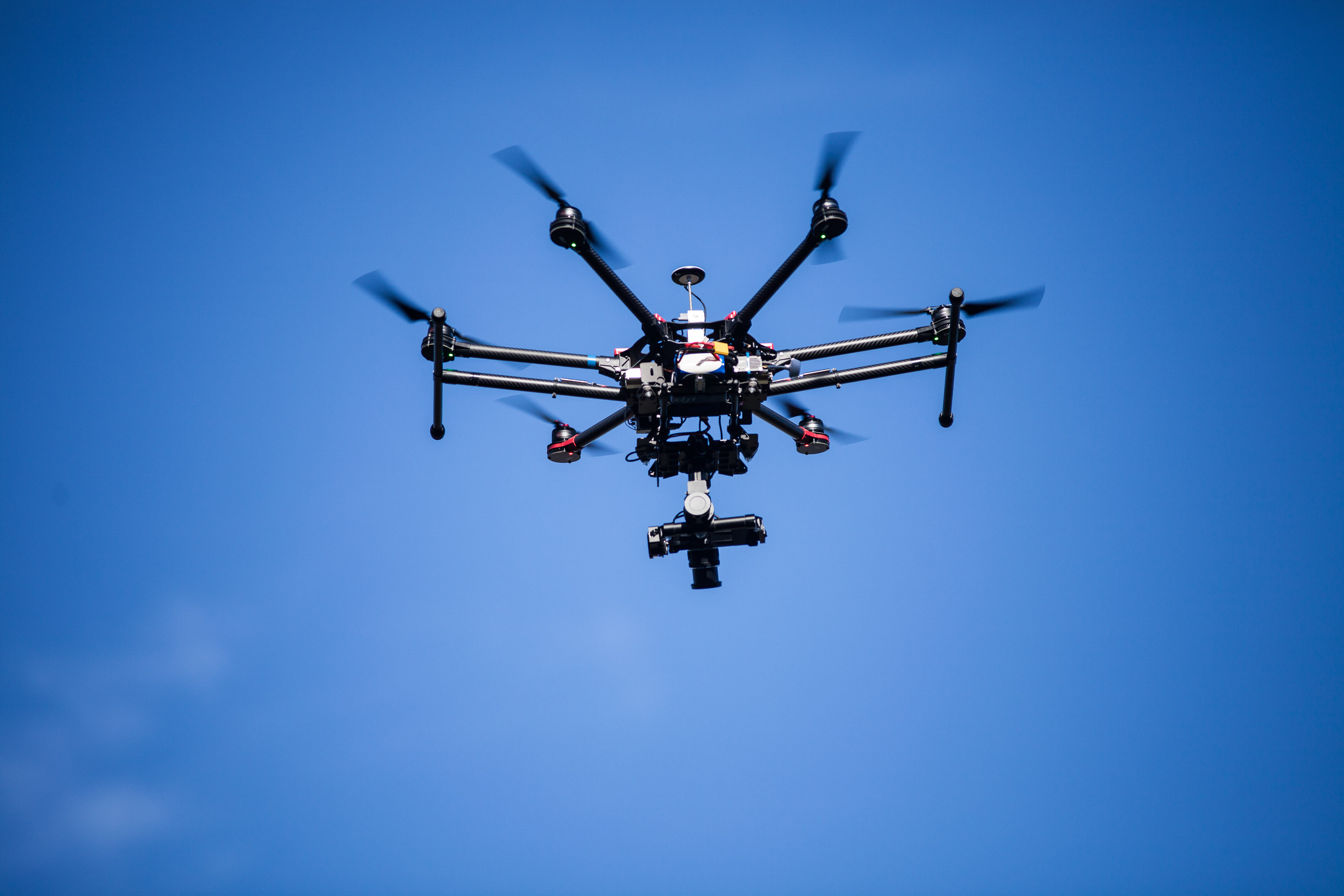
Introduction
In 2026, war continues to destabilize both Eastern Europe and the Middle East. Ukraine entered the fourth year of its war with Russia under massive, combined drone-missile attacks against its energy infrastructure.[1] Having survived its hardest winter in decades, Kyiv continues to conduct drone strikes against military and economic targets inside Russia, raising the costs of the war for Moscow. Both Moscow and Kyiv have accumulated a body of operational knowledge in cutting-edge technology and contemporary drone warfare that neither Western states, on one side, nor the so-called “Axis of Upheaval” (includes Russia, China, Iran, and North Korea) on the other, can readily acquire elsewhere.[2]
The Middle East experienced a new shock in February 2026, with the outbreak of the U.S.-Israel-Iran war. Drawing on Russian technology and tactics developed during the war in Ukraine, Iran launched massive, combined drone-missile strikes against US military facilities, the refineries and economic infrastructure of the Gulf monarchies, and Israeli targets.[3] The cost of expending expensive interceptors against cheap Iranian drones pushed the Gulf monarchies to seek alternative means of protecting their territory. Kyiv seized the moment to move from being a recipient of Western assistance to an exporter of cutting-edge counter-drone technology.
This article argues that Ukraine-Gulf security cooperation is driven less by a shared threat perception than by a convergence of three distinct sets of interests: the Gulf monarchies’ search for cost-effective counter-drone capability and for leverage against their dependence on Washington; their wish to signal to Moscow that Gulf neutrality on Ukraine is conditional; and Kyiv’s need for revenue, interceptors, and fuel outside the Western aid framework.
The Gulf’s Air Defense Predicament
The US-Israel-Iran war exposed a wide gap between legacy air defense architectures and new developments in drone warfare. Over the past two decades, the Gulf monarchies have spent tens of billions of dollars on THAAD and Patriot air defense systems.[4] Within weeks of the outbreak of the war, they began to run short of interceptors, including the Patriot PAC-3 and the GEM-T.[5] During the first three days of the war, the monarchies launched roughly 800 Patriot missiles - more than Ukraine has received since the start of its war with Russia.[6] Ukrainian advisers deployed to the Gulf criticized the “thoughtless” expenditure of $3 million interceptors against Shahed-type drones costing roughly $70,000.[7] After five weeks of war, the Gulf states had expended some 80 percent of their PAC-3 stocks, while Iran retained significant drone and missile capabilities despite intensive US and Israeli strikes.[8]
The war exposed a second vulnerability: Gulf overreliance on US protection and US-supplied weapons. During the first 72 hours of the war, the Gulf states expended more PAC-3 interceptors than Lockheed Martin produces in a year. According to Royal United Services Institute (RUSI) Senior Research Fellow Ed Arnold, the queue for Patriot missiles is years long.[9] Beyond dependence on a single production line, arms export contracts proposed by the US President are subject to congressional review.[10] This makes Saudi and other Gulf air defenses contingent on decisions taken in Washington. Finally, Washington sets the end-use requirements that govern whether American weapons may be employed offensively or defensively.[11] This gives Washington continuing leverage over how third countries employ American systems. Saudi Arabia and its neighbors are therefore seeking to reduce that dependence through alternative partnerships in arms imports and co-production.[12]
Gulf Drivers: Capability, Autonomy, and a Signal to Moscow
Beyond these shared vulnerabilities, the motives for engaging Kyiv vary considerably from state to state. Saudi Arabia seeks to establish itself as an arms producer.[13] Technology transfer and joint-production contracts with Kyiv would allow Riyadh to build domestic drone production lines, strengthening both its defense and its export capacity while creating skilled employment - an explicit Vision 2030 objective. The UAE approaches the Ukrainian defense industry as a venture investor, acquiring stakes in promising Ukrainian startups in anticipation of future returns.[14] Qatar is focused on securing its maritime infrastructure and production facilities, integrating Ukrainian systems and software into a Qatari air defense architecture built with BAE Systems and General Atomics.[15] Oman, Kuwait, and Bahrain, by contrast, are focused on the immediate integration of Ukrainian interceptor drones into their existing air defenses.[16]
A further motivation, largely absent from the existing commentary, is the message that engagement with Kyiv sends to Moscow. Over the past decade, Russia built close ties with Saudi Arabia, the UAE, Bahrain, and other Gulf states. Since the beginning of the war in Ukraine in 2022, the Gulf states have pursued a strategy of active neutrality - offering to mediate while declining to back either belligerent, despite sustained Western pressure to increase the pressure on Russia.[17] The region also became one of the principal conduits for Russian evasion of Western sanctions.[18] Russia expanded its trade with the Gulf monarchies and sustained its cooperation with them within OPEC+, thereby avoiding diplomatic isolation. Russian intelligence-sharing with Iran, and the transfer of the technologies and tactics that Tehran subsequently used in drone warfare against US and Gulf targets, was not received well in the region. Although the US and Europe continuously accused Moscow of assisting Iran during the US-Israel-Iran war, Gulf officials have not directly criticized Russia. To date, the Gulf has preferred to closely cooperate with Russia, and this cooperation continues. However, by signing agreements with Kyiv, Gulf capitals are signaling to Moscow that their neutrality is conditional — and that it could give way to the financing of Ukraine’s defense industry.
What Ukraine Has to Offer
Ukraine now operates one of the world’s most developed layered air defense systems, and there have been media reports suggesting Ukraine has received inquiries from Israel, the United States, and European states about building modern defenses against massive, combined attacks.[19] The Ukrainian system is comprised of three layers, combining Western and Soviet-legacy platforms: Patriot batteries intercept ballistic missiles at altitude; NASAMS and IRIS-T engage cruise missiles and aircraft; and Buk and S-300 systems cover the gaps between them.[20] Its backbone is real-time detection of aerial threats, paired with continuous software development, with a stated interception target of 95 percent.[21]
Russia, however, continues to modify its missiles and drones. In September 2025, Ukraine intercepted only 6 percent of incoming Russian missiles, down from 34 percent in August, despite a lower number of launches.[22] One reason was a change in terminal-phase behavior: the missiles maneuvered and altered course rather than following a conventional ballistic trajectory. Russia is also developing more sophisticated strike drones designed to penetrate Ukraine’s layered defenses.[23] This locks Ukraine into a continuous cycle of adaptation — and it is precisely that cycle which makes Ukrainian experience valuable to its partners, since the relevant technologies and tactics change from month to month.
To counter Russian drones, Ukraine has developed low-cost interceptor drones that cost less than the Russian Geran or the Iranian Shahed. The Ukrainian company TAF Industries produces roughly 80,000 drones per month, among them the Octopus-100 and the Kolibri-i10, which are available for export and conform to NATO standards.[24] SkyFall has developed the P1-SUN interceptor, likewise available for export.[25] In response to Russian jet-powered drones, General Chereshnya and STRIX have developed a chemical accelerator for the Bullet interceptor.[26] Radionix has developed the Shershen launcher, which can fire five different types of surface-to-air missile (SAM).[27] These firms work closely with the Ukrainian armed forces, testing their products under combat conditions - a validation cycle that no Gulf supplier can currently replicate. Over the last year, Ukrainian President Volodymyr Zelenskyy claimed that Ukraine produces more drones than it needs on the battlefield and is ready to export its drones and experience to those who need it – in this case, the Gulf monarchies.[28]
Kyiv’s Drivers and the Limits of the Partnership
Kyiv, for its part, pursues three goals in deepening security cooperation with the Gulf monarchies. First, Ukraine remains critically dependent on US and EU funding for its war economy. Arms and technology exports offer a route to billions of dollars in revenue that is independent of Washington and Brussels. The second goal may be described as “barter diplomacy.” Patriot PAC-3 missiles are one of the major pillars in Ukraine’s layered air defense system against Russian ballistic missiles. For many months, Ukraine has pressed its partners for additional PAC-3 interceptors to protect its military and economic facilities.[29] Kyiv has proposed a barter arrangement to the Gulf Cooperation Council (GCC) states: Ukrainian interceptor drones in exchange for Gulf-held Patriot missiles. During his talks in Qatar, Ukrainian President Volodymyr Zelenskyy went further still, requesting a squadron of Mirage 2000-5 aircraft.[30] Third, Kyiv seeks to shore up its energy security through stable fuel supplies from the Gulf, and in particular the diesel on which the Ukrainian army depends.[31]
To date, Ukraine has signed several Memoranda of Understanding (MoUs) with Gulf states. These are significant political signals, but they remain declaratory: none imposes binding financial obligations on either side. The relationship has only begun to deepen, and the eventual scale of the cooperation remains difficult to assess. Under the “Drone Deal” initiative, Ukrainian companies are establishing headquarters in the United States and the EU, linking Ukrainian know-how to Western industrial infrastructure and, potentially, to Gulf capital.[32] The result is an increasingly dense web in which Ukrainian producers are embedded in Western-Gulf arms transfer chains.
Conclusion
In the course of its war with Russia, Ukraine has developed one of the most sophisticated layered defenses against massive, combined drone-missile strikes. The US-Israel-Iran war exposed the flaws in Gulf air defenses and pushed the monarchies to search for new technologies and concepts for countering combined Iranian strikes. Ukraine offered its experience and its current solutions for meeting those threats, moving from recipient of Western military and economic assistance to prospective arms supplier.
Both sides bring distinct interests to this endeavor. The Gulf monarchies seek to strengthen their air defenses and to reduce their dependence on American weapons and American protection. Beyond that, each state has a distinct stake in the Ukrainian defense industry: Saudi Arabia wants domestic counter-drone production; the UAE wants a venture position in Ukrainian startups; and Qatar wants Ukrainian systems integrated into its own air defenses. Finally, Gulf capitals want to signal to Moscow that their neutrality in the Russia-Ukraine war is revocable, should Russia continue to assist Iran against them. Kyiv, for its part, seeks greater independence from Western funding and aims to become a significant arms exporter, deepening its economic and diplomatic ties across the Gulf. Whether this cooperation matures will turn on three observable indicators: whether the existing MoUs are converted into binding, financed contracts; whether Gulf states in fact transfer PAC-3 interceptors to Ukraine; and whether Washington tolerates both the re-transfer of US-origin munitions and the emergence of a Ukrainian competitor in a market it has long dominated.
Boris Sharov is a non-resident visiting scholar at the Moshe Dayan Center (MDC) for Middle Eastern and African Studies.
*The opinions expressed in MDC publications are the authors’ alone.
[1] Nikolaus J. Kurmayer, “How Ukraine survived its coldest winter in more than a decade,” Euractiv, February 25, 2026.
[2] Andrea Kendall-Taylor, Richard Fontaine, “The Axis of Upheaval: How America’s Adversaries Are Uniting to Overturn the Global Order,” Foreign Affairs, April 23, 2024.
[3] Jared Malsin, Anat Peled, “Iranian Drones Challenge Gulf’s Air Defenses,” The Wall Street Journal, March 1, 2026.
[4] David B. Roberts, “Fences Not F-35s: Drone Attacks and the Illogic of Gulf Procurement,” War on the Rocks, June 1, 2026.
[5] Gerry Doyle, “Sustained Iran Missile Attacks Add Pressure on US to Defend Gulf,” Bloomberg, March 30, 2026.
[6] “Gulf states are burning through interceptors,” The Economist, March 13, 2026.
[7] Julia Struck-Feschenko, “Ukraine Slams Costly US Tactics: Millions Spent to Down Cheap Drones,” Kyiv Post, March 20, 2026; “Exhibit MYP-1, Multiyear Procurement Criteria,” U.S. Department of War; “Shahed-136: The Weapon That Rewrote the Economics of Air War,” Drone Warfare, April 22, 2026.
[8] David B. Roberts, “Fences Not F-35s,” War on the Rocks; Necva Tastan Sevinc, “US officials say Iran retains significant drone, missile capability despite strikes: Report,” Anadolu Agency, April 19, 2026.
[9] Abdul Mohammed, “Saudi Arabia’s Ukraine Defense Deal Is a Hedge Against Washington,” House of Saud, April 3, 2026; Rupert Schulenburg, “Sources of scale: US and Indo-Pacific allies’ defence-industrial cooperation,” IISS Military Balance Blog, August 4, 2025; Peter Suciu, “Patriot Missile Deliveries Could Be Delayed, Lockheed Martin Warns,” The National Interest, June 14, 2026.
[10] Paul K. Kerr, “Arms Sales: Congressional Review Process,” Congressional Research Service Report RL31675, Congress.gov (accessed July 12, 2026).
[11] Nancy A. Youssef, Michael R. Gordon, “U.S. Lifts Restrictions on Sale of Bombs to Saudi Arabia,” The Wall Street Journal, August 13, 2024.
[12] Abdul Mohammed, “Saudi Arabia’s Ukraine Defense Deal,” House of Saud; Albert Vidal Ribe, “Challenge for the Gulf states: rearming after the war,” IISS, May 12, 2026; Alistair Mac Donald, Summer Said, “Saudi Arabia in Talks to Buy Air-Defense Equipment from Ukraine,” The Wall Street Journal, March 10, 2026.
[13] “Saudi Arabia’s Ukraine Defense Deal,” House of Saud.
[14] “EDGE Group’s $760M Deal to Acquire 30% of Fire Point Not Approved by Ukraine’s Antimonopoly Committee,” InVenture, March 16, 2026.
[15] Agnes Helou, “Drones, Iran’s presence and Qatari branding: The notable sights from DIMDEX,” Breaking Defense, March 25, 2022.
[16] “Ukraine in talks with Oman, Kuwait, Bahrain on security cooperation, Zelensky says,” The Straits Times, April 10, 2026.
[17] Jens Heibach, “The Benefits of Neutrality: Saudi Foreign Policy in the Wake of the Ukraine War,” German Institute for Global and Area Studies (GIGA), 2024.
[18] Boris Sharov, “Why the Saudi-UAE Rivalry Is a Strategic Dilemma for Russia,” Italian Institute for International Political Studies (ISPI), March 10, 2026.
[19] “Ukraine’s Air Defense System: World-Class and Continuously Improving,” Dignitas Fund, April 16, 2026; Stav Levaton, “Cheap and elusive, drones put incessant pressure on Israel’s evolving air defenses,” The Times of Israel, March 27, 2026.
[20] David Kirichenko, “Ukraine’s Air Defenses – World Class, and Improving,” Center for European Policy Analysis (CEPA), April 13, 2026.
[21] “War Plan: Our Steps to Force Russia into Peace,” Ministry of Defence of Ukraine, February 24, 2026.
[22] “Russian missile upgrade outpaces Ukraine’s Patriot defences,” Financial Times, October 2, 2025.
[23] Peter Beaumont, “Russia deploys new high-speed drones amid claims they contain western parts,” The Guardian, January 23, 2026; Federico Brosari, “How Russian Drone Developers Outpace the West,” Center for European Policy Analysis (CEPA), December 11, 2025.
[24] “Interceptors,” TAF Industries (accessed July 12, 2026).
[25] Andrii Konyk, “SkyFall spoke about the price and performance of P1-SUN interceptor drones,” Mezha, February 10, 2026.
[26] “General Chereshnya BULLET – Anti-Shahed (Digital / Day),” [Ukrainian], Gencherry.com (accessed July 12, 2026).
[27] Iryna Levytska, “Ukrainian company unveils project for Shershen air defence system supporting five missile types,” Ukrainska Pravda, February 12, 2026.
[28] Andriy Standnik, “Ukraine suggested the Drone Deal format to its partners,” ZN.UA, April 28, 2026 [Ukrainian]; Yuri Tarasovksy, “Zelenskyy: Ukraine is ready to export weapons and suggests the Drone Deal format to its partners,” Forbes Ukraine, April 28, 2026 [Ukrainian].
[29] Polina Moroziuk, “Ukraine urgently appeals to nearly 40 allies for Patriot interceptors,” The Kyiv Independent, July 2, 2026.
[30] “Ukraine’s Zelenskyy signs air defence deals with UAE, Qatar on Gulf tour,” Al Jazeera, March 28, 2026.
[31] Skitlana Kravchenko, Oksana Kovalenko, “Zelensky Said That in the Middle East He Agreed on Diesel Fuel Supplies to Ukraine for at Least a Year,” [Ukrainian], Babel, March 28, 2026.
[32] “The Government streamlines technology and weapons transfers under the Drone Deal by reducing the approval process to 30 days,” Ministry of Defence of Ukraine, July 1, 2026; “Ukrainian drone manufacturers Swarmer and General Chereshnya have qualified for the Pentagon’s $1 billion competition,” DEV.ua, July 2, 2026.